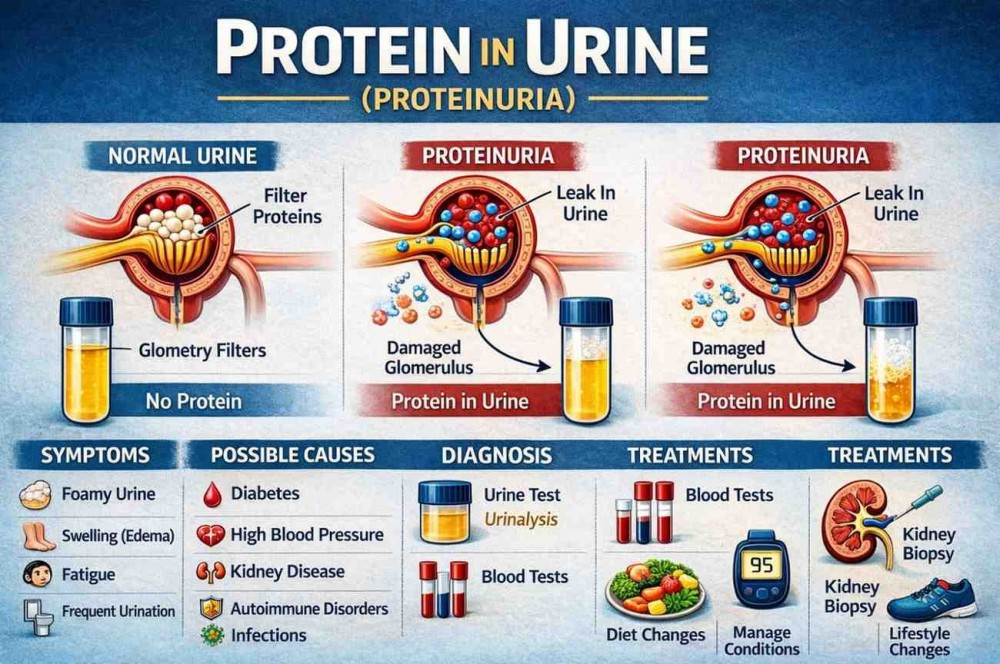
Protein in urine, medically known as proteinuria, is a condition where an abnormal amount of protein is present in the urine. Normally, the kidneys filter waste products and extra fluids from the blood while keeping important substances like proteins inside the body. When the kidneys become damaged or their filtering system does not work properly, proteins can leak into the urine. While a small amount of protein in urine may sometimes occur temporarily, persistent proteinuria may indicate an underlying health issue, particularly related to kidney function.
Role of Kidneys in Filtering Protein
The kidneys contain millions of tiny filtering units called nephrons. These units filter the blood and remove waste products through urine while retaining essential nutrients and proteins in the bloodstream. Proteins are vital for building muscles, repairing tissues, and maintaining proper immune function.
When the kidney filters become damaged or inflamed, they may allow protein molecules—especially a protein called albumin—to pass into the urine. This condition is often an early sign of kidney damage.

Causes of Protein in Urine
Several health conditions and factors can cause protein to appear in the urine. Some causes are temporary, while others may indicate more serious kidney problems.
Kidney Disease
Kidney diseases such as chronic kidney disease (CKD) or glomerulonephritis can damage the kidney filters and lead to protein leakage. In such cases, proteinuria may worsen if the underlying disease is not treated.
Diabetes
Diabetes is one of the most common causes of protein in urine. High blood sugar levels can damage the blood vessels in the kidneys over time, leading to a condition known as diabetic nephropathy.
High Blood Pressure
Uncontrolled high blood pressure can put strain on the kidneys and gradually damage their filtering system. This damage can allow proteins to leak into the urine.
Infections
Certain infections, such as urinary tract infections or kidney infections, may temporarily cause proteinuria. Once the infection is treated, the protein levels in urine may return to normal.

Temporary Factors
In some cases, protein in urine can occur due to temporary conditions such as:
-
Dehydration
-
Intense physical exercise
-
Fever
-
Stress
-
Exposure to extreme cold
These factors usually cause temporary proteinuria that resolves once the body recovers.
Symptoms of Protein in Urine
Protein in urine often does not cause noticeable symptoms in its early stages. Many people may not realize they have the condition until it is detected during a routine medical test. However, as the condition progresses, certain signs may appear.
Common symptoms include:
-
Foamy or bubbly urine
-
Swelling in the hands, feet, ankles, or face
-
Fatigue or weakness
-
Loss of appetite
-
Nausea
-
Frequent urination
Foamy urine is one of the most noticeable signs because excess protein changes the texture of urine.
Diagnosis
Doctors usually detect protein in urine through laboratory tests. The most common test is a urinalysis, which checks urine for abnormal substances including protein.
Additional tests may include:
-
Urine protein test to measure the amount of protein in the urine
-
Blood tests to evaluate kidney function
-
Urine albumin-to-creatinine ratio (ACR) test
-
Ultrasound or imaging tests to examine kidney structure
In some cases, a kidney biopsy may be recommended to determine the exact cause of kidney damage.
Treatment of Protein in Urine
The treatment for proteinuria depends on the underlying cause. Doctors focus on managing the condition responsible for kidney damage and preventing further complications.
Common treatment approaches include:
-
Controlling blood sugar levels in diabetic patients
-
Managing high blood pressure through medication and lifestyle changes
-
Treating infections with appropriate medications
-
Reducing salt and processed foods in the diet
-
Maintaining a healthy body weight
Doctors may also prescribe medications that help protect kidney function and reduce protein leakage.
Prevention and Kidney Care
Maintaining kidney health is important for preventing protein in urine. Healthy lifestyle habits can significantly reduce the risk of kidney damage.
Important preventive steps include:
-
Drinking enough water
-
Following a balanced diet
-
Controlling blood pressure and blood sugar levels
-
Exercising regularly
-
Avoiding excessive use of painkillers or medications without medical guidance
-
Scheduling regular health checkups
People with diabetes or high blood pressure should monitor their kidney health regularly to detect early signs of proteinuria.
Conclusion
Protein in urine is a condition that occurs when the kidneys allow protein to leak into the urine due to damage or dysfunction in their filtering system. While temporary proteinuria may not be harmful, persistent protein in urine can indicate kidney disease or other health problems. Early detection through routine medical tests and proper treatment can help prevent further kidney damage. Maintaining a healthy lifestyle and managing risk factors are essential for protecting kidney function and supporting long-term health.