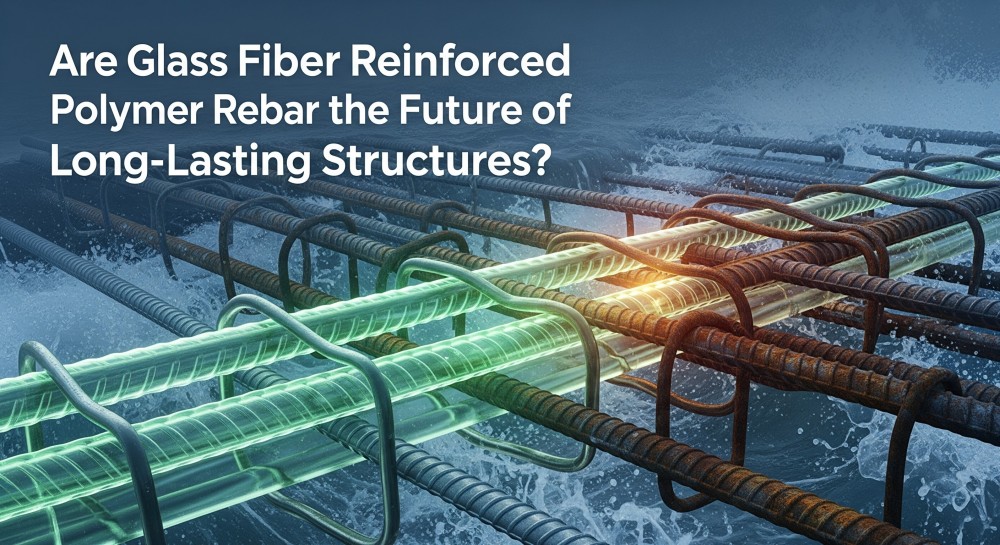
The strength behind any structure is largely dependent on what lies beneath its surface. It has been a long time since traditional steel reinforcement has been the backbone of modern construction. They used to offer stability in every construction project, from residential buildings to massive bridges. But long term exposure to moisture, chemicals, and harsh weather conditions gradually corrodes steel, leading to expensive repairs and shorter service life.
In recent years, the construction industry has been in search of alternatives that can overcome these limitations. Among different options, glass fibre reinforced polymer rebar is emerging as a promising solution for building long-lasting and maintenance-free structures. But what makes this material different, and could it truly replace steel as the standard?
What Is Rebar and Why Is It Used?
Rebar, or reinforcing bar, is embedded within concrete to improve its tensile strength. While concrete is strong under compression, it tends to crack under tension. Traditionally, steel has been the material of choice because of its strength, cost-effectiveness, and availability.

The Problem with Steel Reinforcement
Although steel performs well structurally, it is highly susceptible to corrosion. Over time, rust expands, creating internal pressure that cracks concrete. This leads to reduced durability, higher maintenance costs, and safety concerns in the long run.
What Exactly Is GFRP Rebar?
Glass fiber reinforced polymer rebar is a non-metallic alternative to steel, made from continuous glass fibers embedded in a polymer matrix. These bars are lightweight, corrosion-resistant, and offer impressive tensile strength. (CL)
Why Is GFRP Rebar Gaining Global Attention?
Durability in Harsh Environments
Coastal regions, chemical plants, and water infrastructure face constant exposure to moisture and salts. In these areas, glass fiber reinforced polymer rebar can prevent structural damage caused by corrosion, ensuring longer life and reduced repair frequency.
Lower Long-Term Costs
Although GFRP rebar can cost more upfront than steel, it dramatically reduces maintenance expenses over the lifespan of a structure. For large-scale projects like highways and bridges, this translates into significant savings.
Ease of Installation and Handling
Because of its light weight, workers can transport and position GFRP rebar more efficiently, improving productivity and reducing labor costs.

Applications of Glass Fiber Reinforced Polymer Rebar
Infrastructure Projects
GFRP rebar is being widely adopted in bridge decks, marine structures, and tunnels where corrosion risks are high.
Water Treatment and Chemical Plants
These facilities deal with highly corrosive substances, making GFRP rebar an ideal choice to ensure safety and reliability.
Residential and Commercial Construction
Though still less common in smaller projects, the benefits of non-corrosive reinforcement are gradually attracting developers looking for longevity and reduced upkeep.
Technical Considerations in Using GFRP Rebar
Differences in Structural Behavior
Unlike steel, GFRP rebar has a linear elastic response until failure, meaning it does not yield or deform plastically. Engineers must design conservatively, ensuring adequate safety factors to avoid sudden brittle failure.
Modulus of Elasticity
The modulus of elasticity of GFRP is lower than that of steel, resulting in higher deflections under load. Designers compensate by increasing rebar size or quantity to maintain structural stiffness.
Design Codes and Standards
While global standards for steel reinforcement are well established, GFRP design codes are still evolving. However, organizations such as ACI (American Concrete Institute) and CSA (Canadian Standards Association) have developed guidelines to aid engineers in reliable application.
Current Limitations and Barriers for Adoption
Higher Initial Material Costs
GFRP rebar production remains costlier than steel due to specialized manufacturing processes. This discourages widespread adoption despite its long-term benefits.
Limited Industry Awareness
Many contractors and designers are more familiar with steel, making them hesitant to specify a material with different structural behavior and design requirements.
Lack of Universal Standards
Although progress is being made, the absence of universally adopted codes slows down the integration of GFRP into routine construction projects.
The Future of Reinforcement: Will GFRP Rebar Replace Steel?
Technological Progress and Cost Reductions
Advances in material science and increased production capacity are expected to reduce the price of glass fiber reinforced polymer rebar, making it more competitive with steel in the near future.
Sustainability and Lifecycle Performance
As the construction industry prioritizes sustainable practices, GFRP rebar aligns with environmental goals by reducing repair cycles, conserving raw materials, and extending the lifespan of infrastructure.
A Gradual Transformation Rather Than Immediate Replacement
Steel is unlikely to disappear overnight. However, as critical infrastructure projects demand 75- to 100-year lifespans with minimal maintenance, GFRP rebar is poised to transition from niche applications to mainstream reinforcement.
Final Takeaway
Choosing the right reinforcement isn’t just an engineering decision, it’s a legacy. Every bridge, tower, port, and tunnel we build today will stand as a symbol of human progress for decades, and even centuries. Glass Fiber Reinforced Polymer rebars are more than a technical solution to corrosion; they are a commitment to future generations.
When we choose innovation over convention, we are not just cutting maintenance costs or extending service life. By embracing GFRP rebars, engineers, developers, and policymakers are sending a clear message: our structures will not fail, and neither will our responsibility to those who come after us.
The future of construction is not just about concrete and steel, it’s about vision, resilience, and trust. And in that future, GFRP rebars are paving the way.