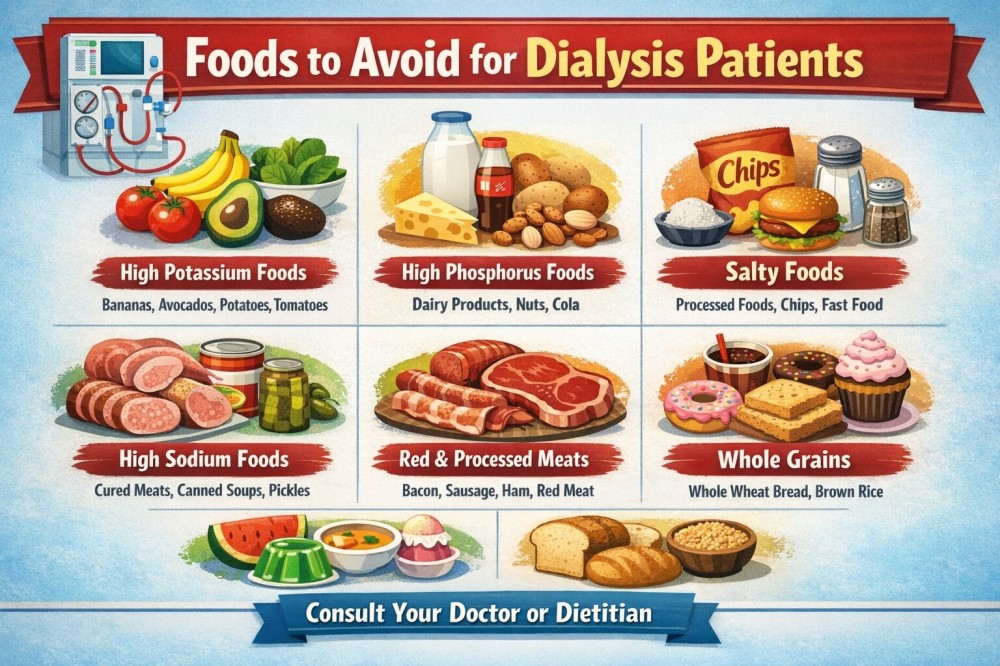
For individuals receiving dialysis treatment, diet is more than just a daily routine—it is a critical part of managing kidney health. Dialysis helps remove waste products, excess fluids, and toxins from the blood when the kidneys are no longer functioning properly. However, dialysis cannot fully replace all kidney functions. This is why making careful food choices is essential to prevent complications and maintain overall well-being.
Understanding what foods dialysis patients should avoid can significantly improve treatment outcomes and quality of life.
Why Dietary Restrictions Matter
Healthy kidneys balance important minerals like potassium, phosphorus, and sodium in the body. When kidney function declines, these minerals can build up in the bloodstream and cause serious health issues. Although dialysis removes some excess waste and fluids, it does not eliminate everything. Therefore, limiting certain nutrients through diet becomes necessary.

High-Potassium Foods to Avoid
Potassium is vital for muscle and nerve function, especially heart rhythm. However, high potassium levels (hyperkalemia) can be dangerous for dialysis patients and may lead to irregular heartbeat or cardiac arrest.
Foods high in potassium that should be limited or avoided include:
-
Bananas
-
Oranges and orange juice
-
Potatoes

-
Tomatoes and tomato-based products
-
Spinach
-
Avocados
-
Dried fruits
-
Coconut water
Lower-potassium alternatives such as apples, berries, grapes, cabbage, and cucumbers are often safer choices, but portion control still matters.
High-Phosphorus Foods to Avoid
Phosphorus helps maintain strong bones, but too much phosphorus in dialysis patients can weaken bones and cause calcium deposits in blood vessels, increasing the risk of heart disease.
Common high-phosphorus foods include:
-
Milk, cheese, and yogurt
-
Processed meats
-
Nuts and seeds
-
Whole grains (in large amounts)
-
Chocolate
-
Cola drinks
-
Packaged and processed foods with phosphate additives
Phosphorus additives are commonly found in processed foods, so checking food labels is very important. Ingredients containing “phos” often indicate added phosphorus.
High-Sodium Foods to Avoid
Sodium increases thirst and causes fluid retention, which can lead to swelling, high blood pressure, and difficulty breathing between dialysis sessions. Since fluid intake is often restricted, controlling sodium intake is essential.
Foods high in sodium include:
-
Pickles
-
Canned soups
-
Instant noodles
-
Fast food
-
Chips and salted snacks
-
Processed and packaged foods
-
Sauces like soy sauce and ketchup
Preparing meals at home and using herbs and spices instead of salt can help reduce sodium consumption.
Fluid Restrictions
Dialysis patients may need to limit fluid intake to prevent fluid overload. Excess fluid can cause swelling in the legs, high blood pressure, and strain on the heart and lungs.
Fluids include more than just water. Patients should monitor:
-
Tea and coffee
-
Soft drinks
-
Soups
-
Ice cream
-
Gelatin desserts
-
Juicy fruits
Following the fluid allowance recommended by a healthcare provider is crucial.
Protein Intake Considerations
Unlike earlier stages of kidney disease, dialysis patients usually need moderate to higher amounts of high-quality protein because dialysis removes some protein from the body. However, protein intake must still be balanced to avoid excess waste buildup. Lean meats, eggs, and controlled portions of plant protein are generally recommended under medical guidance.
Foods with Hidden Additives
Many processed foods contain hidden potassium and phosphorus additives. Salt substitutes often contain potassium chloride, which can be dangerous for dialysis patients. Always read ingredient labels carefully and consult a dietitian if unsure.
The Importance of Personalized Diet Planning
Each dialysis patient has unique nutritional needs based on lab results, body weight, age, and medical history. A renal dietitian can create a personalized meal plan that ensures proper nutrition while limiting harmful nutrients.
Conclusion
Diet management is a key component of dialysis care. Dialysis patients should avoid high-potassium, high-phosphorus, and high-sodium foods, as well as excessive fluids and processed items with hidden additives. Careful dietary choices, combined with regular medical supervision, can help prevent complications, improve energy levels, and enhance overall quality of life. Making informed food decisions empowers patients to take control of their kidney health and support successful dialysis treatment.