

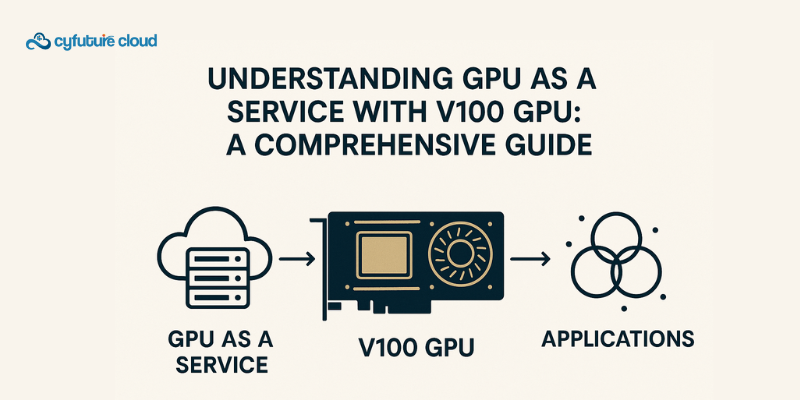
In recent years, demand for high-performance computing resources has surged across industries such as artificial intelligence, data science, and video rendering. One of the key enablers of this computing revolution is GPU as a Service (GPUaaS), offering scalable, on-demand access to powerful graphics processing units without the upfront costs and management overhead of owning physical hardware. Among the popular GPUs used in these services, the NVIDIA V100 GPU stands out due to its robust capabilities tailored for intensive workloads.
This guide explains what GPU as a Service means, highlights the features of the V100 GPU, and explores how businesses and developers can benefit from this technology.
What is GPU as a Service?
GPU as a Service is a cloud computing model providing access to GPUs through the internet. Instead of companies purchasing, installing, and maintaining expensive GPU hardware onsite, they can rent GPU resources from cloud providers on flexible terms such as hourly or monthly billing.

This model is especially useful for workloads requiring parallel processing power, including:
- Machine learning model training and inferencing
- High-performance scientific simulations
- 3D rendering and video editing
- Cryptocurrency mining
- Big data analytics
By outsourcing GPU infrastructure, organizations can scale usage to match fluctuating demand, reduce capital expenditures, and focus their IT efforts on application development rather than hardware management.
The NVIDIA V100 GPU: Powering Next-Gen Computing
Introduced as part of NVIDIA’s Tesla series, the V100 GPU is a powerful accelerator designed for data centers and enterprise AI workloads. Built on the Volta architecture, it delivers exceptional compute performance and memory bandwidth optimized for deep learning and HPC (High-Performance Computing).
Key attributes of the V100 GPU include:
- CUDA Cores: 5120 cores for massive parallel processing
- Tensor Cores: 640 specialized cores that accelerate AI matrix operations, enabling faster neural network training
- Memory: 16 GB or 32 GB of HBM2 memory with 900 GB/s bandwidth, ensuring quick data access
- FP16 and FP32 Performance: Supports mixed-precision computing, with up to 125 teraflops (TFLOPS) for FP16 operations, ideal for AI workloads
- NVLink: High-speed interconnect technology for multi-GPU setups, enhancing data exchange
Such specifications make the V100 GPU a top choice for enterprises embracing AI/ML projects, cloud computing, and HPC without the hassles of frequent hardware upgrades.

How GPU as a Service Uses V100 GPUs
Cloud providers integrate V100 GPUs within their infrastructure to offer ready-to-use GPU instances. These services remove the complexity of hardware procurement and maintenance by providing users access through virtual machines or containers configured with V100 GPUs.
Typical scenarios for using V100 GPUs on GPU as a Service platforms include:
- Deep Learning Training: Developers leverage the Tensor Cores in the V100 for rapid model training cycles, reducing iteration time and speeding up time to market.
- Inference at Scale: Once models are trained, GPUaaS allows intelligent scaling of inference workloads without additional hardware investments.
- Scientific Research: Researchers can run simulations using floating-point precision features of the V100, handling massive datasets on demand.
- Rendering and Visualization: Creative professionals and studios use GPU instances for real-time rendering or batch processing of high-resolution graphics efficiently.
With GPUaaS, customers typically pay only for what they use, opting for hourly or subscription plans that fit their workload timeframes.
Benefits for Businesses Using GPU as a Service with V100 GPUs
- Cost Efficiency
Buying V100 GPUs outright requires large upfront capital and ongoing maintenance costs. GPUaaS transforms these into operational expenses, making budgeting predictable and lowering barriers to advanced computing power. - Scalability and Flexibility
GPU needs can vary greatly between projects or over time. GPUaaS platforms allow businesses to scale GPU resources up or down rapidly, ensuring they don’t pay for idle hardware. - Access to Cutting-Edge Technology
Using V100 GPUs through GPUaaS ensures access to high-performance and up-to-date hardware without worrying about depreciation or obsolescence. - Simplified IT Management
Cloud providers handle infrastructure monitoring, patching, and load balancing, enabling companies to focus on their core applications rather than backend GPU management complexities. - Global Availability
GPU as a Service offerings typically reside in multiple global data centers, enabling low-latency access and compliance with local data regulations.
Use Cases Across Industries
- Healthcare: Accelerating medical image analysis and genomics research needing fast matrix computations.
- Finance: Running risk simulations and fraud detection algorithms requiring parallelized data processing.
- Entertainment: Scaling rendering workloads for films, animations, and virtual production.
- Automotive: Training AI models for autonomous vehicles using massive video and sensor data handled efficiently by V100-powered GPU instances.
These examples highlight how GPUaaS paired with V100 GPUs is pivotal for innovation in tech-driven sectors.
Choosing the Right GPU as a Service Provider
When selecting GPU as a Service platforms offering V100 GPUs, consider factors like:
- Pricing models and any minimum subscription periods
- Availability of GPU instance types and configurations
- Network performance and latency relevant to your workloads
- Security and compliance certifications
- Support for popular AI frameworks like TensorFlow, PyTorch, or CUDA
- Integration with your data storage and processing pipelines
Well-established cloud providers usually have comprehensive ecosystems and management tools simplifying deployment and monitoring.
Future Trends in GPU as a Service
The GPUaaS market continues to grow as AI, machine learning, and graphics demands expand. Upcoming generations of GPUs will deliver even more performance efficiencies, while service providers will enhance features such as serverless GPU inferencing and optimized container orchestration.
Meanwhile, the V100 remains a reliable workhorse in many environments for its balanced mix of power and versatility.





