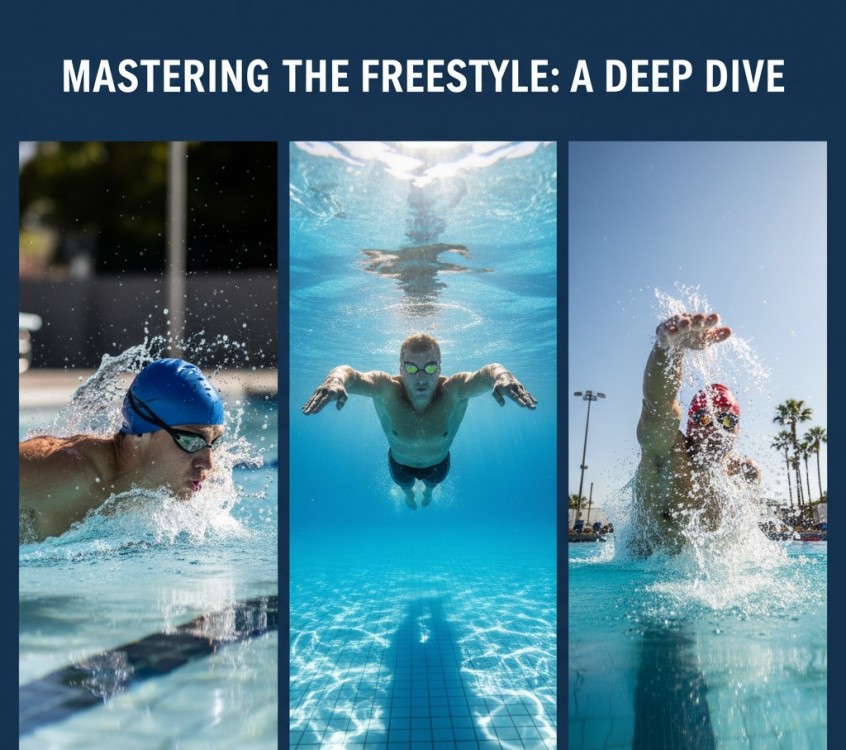
For generations, people have debated whether swimming is a sport or just a recreational activity. Some see it as a relaxing dip on a hot day, while others view it as one of the most demanding physical challenges ever designed.
At LegendarySwimmers.com, we’re diving deep into the truth — and by the end of this article, you’ll see why swimming isn’t just a sport, but one of the most complete and respected ones in existence.
What Defines a Sport?
To determine whether swimming qualifies as a sport, we first need to understand what makes any activity a sport. The key components are:

-
Physical Effort — It must challenge the body and build strength.
-
Skill and Technique — It requires practice, timing, and control.
-
Competition — It includes structured events with rules and scoring.
Swimming easily meets all three. Every stroke — from freestyle to butterfly — demands coordination, endurance, and flawless execution. Swimmers spend years refining their technique, pushing physical and mental limits to perform at their peak.
The Physical Power of Swimming
Swimming isn’t just about moving through water; it’s a full-body test of strength, balance, and endurance. Each stroke works multiple muscle groups — arms, shoulders, core, and legs — while also improving flexibility and posture.

Athletic benefits of swimming include:
-
Improved cardiovascular health
-
Enhanced muscle tone and stamina
-
Greater lung capacity
-
Increased joint mobility
Unlike land-based sports, swimming’s water resistance means every motion becomes resistance training. That’s why swimmers develop lean muscle and unmatched endurance without high-impact strain.
The Mental Strength Behind Every Lap
Beyond its physical demands, swimming is a game of mental resilience. Training sessions often last for hours, requiring focus, patience, and discipline. Swimmers must manage their breathing, pacing, and form — all while maintaining concentration and rhythm.
In competitive swimming, mental preparation is just as vital as physical training. Legendary champions like Michael Phelps credit much of their success to visualization, goal-setting, and mental control during races.
At LegendarySwimmers.com, we believe that swimming trains not only the body — but also the mind to stay calm and focused under pressure.
Swimming as a Global Competitive Sport
Swimming has long been a cornerstone of global sports. It was first included in the Olympic Games in 1896, and since then, it’s become one of the most-watched events worldwide.
Competitive swimming is governed by World Aquatics (formerly FINA), which ensures standard rules, timing systems, and qualification guidelines. Athletes compete across various strokes, distances, and formats — both in pools and open water.
Names like Katie Ledecky, Ian Thorpe, and Caeleb Dressel have shown the world the incredible athleticism, speed, and precision swimming demands.
Swimming vs. Other Sports
What separates swimming from most other sports is its dual nature — it’s both physically intense and low-impact. While runners battle joint stress and cyclists face endurance fatigue, swimmers enjoy balanced muscle development with reduced injury risk.
Swimming also builds versatility — it can be competitive, recreational, or therapeutic. It develops physical health while reducing stress, making it one of the few sports that strengthens both body and mind simultaneously.
Why Swimming Is More Than Exercise
Some people mistake swimming for simple exercise. But competitive swimmers know it’s far more technical than casual movement in water. Every detail — from hand placement to breathing rhythm — can affect speed and efficiency.
Training involves mastering turns, starts, and underwater kicks — all governed by precise timing. That’s why swimming is not just a form of fitness; it’s a strategic, skill-based sport requiring years of refinement.
A Lifelong Passion
Another reason swimming stands out as a sport is its inclusivity. Whether you’re a child learning to float or an adult chasing personal fitness goals, swimming welcomes everyone.
It’s a sport you can pursue for a lifetime — building health, focus, and confidence along the way.
At LegendarySwimmers.com, we celebrate swimming not only as an elite sport but also as a lifelong passion that connects people across all generations.
The Verdict: Swimming Is the Ultimate Sport
When you consider its physical challenges, mental demands, and global recognition, there’s no doubt that swimming is a sport — and one of the most complete forms of athletic expression on Earth.
It requires precision, strength, and endurance — all within a medium that resists every move you make.
That’s what makes swimming so extraordinary — and why it deserves its rightful place among the greatest sports in history.
FAQs
1. Is swimming officially recognized as a sport?
Yes. Swimming is governed globally by World Aquatics and has been part of the Olympic Games since 1896.
2. What makes swimming different from other sports?
It’s a full-body, low-impact sport that builds strength, endurance, and coordination simultaneously.
3. Can swimming be both recreational and competitive?
Absolutely! You can enjoy swimming for fun or train for competitions — it’s equally beneficial either way.
4. Does swimming build muscle and improve fitness?
Yes. Swimming tones muscles, boosts stamina, and improves heart and lung health.
5. Why is swimming good for mental health?
The rhythmic breathing and flow of movement promote relaxation, focus, and stress relief.