

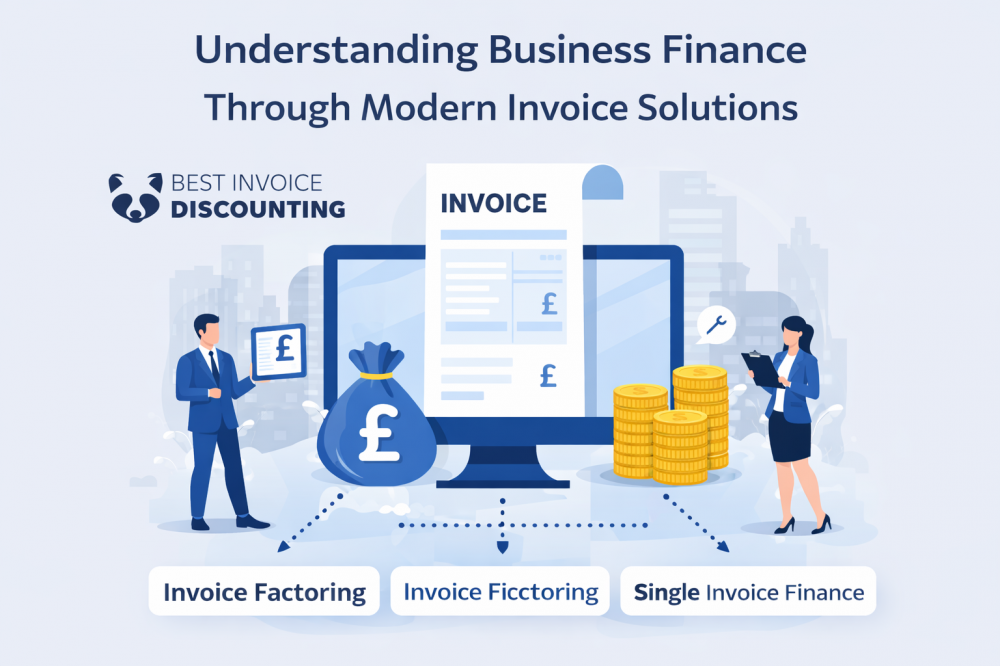
Understanding Business Finance Through Modern Invoice Solutions
Running a business often means dealing with a gap between completing work and getting paid. Even profitable companies can struggle with cash flow simply because customers take time to settle invoices. This is where Business Finance becomes a practical tool rather than a theoretical concept. Instead of relying only on loans or personal funds, many businesses now use invoice-based finance to manage everyday expenses.
Invoice-related finance options are not new, but they have become more flexible and accessible in recent years. From small service providers to established B2B firms, companies are using these tools to stabilise cash flow without adding long-term debt.
Why Cash Flow Matters More Than Profit
Profit shows whether a business is successful on paper, but cash flow determines whether it can survive day to day. Salaries, rent, supplier payments, and taxes all require immediate funds. When customers delay payments by 30, 60, or even 90 days, businesses can find themselves under pressure despite having money owed to them.

Invoice-based Business Finance helps bridge this timing gap. Instead of waiting for customers to pay, businesses can unlock funds tied up in unpaid invoices and continue operating smoothly.
The Role of Invoice Factoring in Business Finance
Invoice factoring is one of the most commonly used invoice-based finance solutions. It allows businesses to sell unpaid invoices to a third party in exchange for immediate cash. The finance provider then collects payment directly from the customer.
Many businesses work with invoice factoring companies because the process is straightforward and predictable. Once an invoice is raised and approved, a large percentage of its value is released quickly. This approach suits businesses that prefer to outsource credit control and focus on delivering their services.
Invoice factoring finance is often used by companies that issue regular invoices and want a consistent cash flow solution. It is particularly useful for growing businesses that need working capital to support new orders or expand operations.
How Invoice Discounting Works Differently
While factoring involves handing over invoice collection, Invoice Discounting offers a different approach. In this model, the business retains control over customer relationships and collections. The finance provider advances funds against invoices, but customers may not even be aware that a finance arrangement is in place.

This option appeals to businesses that value confidentiality and already have strong internal credit control systems. An invoice discounting service can provide flexibility while allowing businesses to maintain their existing processes.
Invoice discounting is often used by established companies with experienced finance teams, although simplified versions are now available for smaller firms as well.
Single Invoice Finance for Specific Needs
Not all businesses want an ongoing finance arrangement. Sometimes, a single large invoice can create a temporary cash flow issue. Single Invoice Finance is designed for exactly this situation.
Rather than committing to a long-term contract, businesses can choose to finance one invoice when needed. This option works well for project-based businesses, contractors, or companies dealing with occasional large clients who have long payment terms.
Single invoice solutions allow businesses to manage short-term gaps without restructuring their entire finance setup.
Choosing the Right Invoice Finance Option
Selecting the right form of Business Finance depends on how a business operates. Companies with high invoice volumes may benefit from invoice factoring finance or discounting services. Those with occasional cash flow challenges may prefer single invoice solutions.
Factors to consider include:
- Whether the business wants to manage customer payments internally
- How often invoices are raised
- The average payment terms offered to customers
- The importance of confidentiality
Understanding these elements helps businesses choose a solution that supports operations rather than complicates them.
Common Misunderstandings About Invoice-Based Finance
Some businesses hesitate to use invoice finance because of outdated assumptions. One common belief is that invoice finance is only for struggling businesses. In reality, many well-managed companies use it simply to improve cash flow timing.
Another misconception is that customers will react negatively. In practice, most customers are familiar with invoice finance arrangements, especially in B2B environments. Transparency and professionalism usually prevent any issues.
Invoice finance is not a sign of weakness; it is a financial tool that reflects modern business realities.
How Invoice Finance Supports Growth
Growth often creates pressure on cash flow. Taking on new clients, increasing staff, or investing in equipment requires funds upfront. Waiting for invoices to be paid can slow progress.
By using invoice-based Business Finance, companies can fund growth using money they have already earned. This approach avoids taking on unnecessary debt and aligns finance with actual trading activity.
Providers such as Best Invoice Discounting focus on helping businesses access funds already locked in their receivables rather than pushing complex financial products.
The Future of Business Finance
As businesses continue to move away from rigid banking models, invoice finance is becoming more mainstream. Digital systems have simplified application processes, improved transparency, and reduced approval times.
Invoice factoring companies and discounting providers are increasingly offering tailored solutions rather than one-size-fits-all products. This flexibility makes invoice finance accessible to a wider range of businesses across different sectors.
Frequently Asked Questions
What is Business Finance in simple terms?
Business Finance refers to methods businesses use to manage money for daily operations, growth, and stability. It includes tools that help with cash flow, such as invoice-based finance.
How does invoice factoring finance differ from a loan?
Invoice factoring finance is based on unpaid invoices rather than borrowing money. Funds are released against invoices already issued, not future earnings.
Are invoice factoring companies suitable for small businesses?
Yes, many small businesses use invoice factoring companies to manage cash flow, especially when dealing with longer payment terms from customers.
Is Invoice Discounting confidential?
In most cases, yes. Invoice Discounting allows businesses to retain control over customer payments, and customers may not know a finance provider is involved.
When should a business consider Single Invoice Finance?
Single Invoice Finance is useful when a business needs funds for one specific invoice rather than ongoing support. It works well for project-based or seasonal needs.
Does using an invoice discounting service affect customer relationships?
Generally no. When managed professionally, invoice discounting services operate in the background and do not interfere with customer communication.





