

Picking the right CRM for startups is one of those decisions that feels small early on, until it isn't. The wrong tool buries your team in data entry. The right one becomes the backbone of every deal you close, every follow-up you nail, and every customer relationship you actually keep. Below are 8 platforms worth serious consideration.
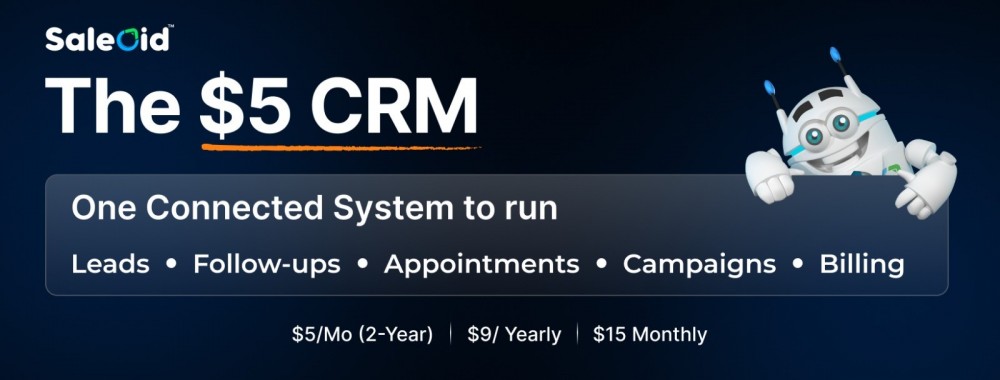
If you want a CRM built with modern startups in mind, Saleoid AI CRM software deserves a hard look. It combines contact management, pipeline tracking, and AI-powered lead scoring into one clean workspace without the bloated feature sets that make enterprise tools so painful to onboard.
What sets Saleoid apart is how its AI layer actually works in practice. It surfaces actionable insights from your sales data, helps prioritize which leads to chase, and automates routine follow-ups so your team spends time selling, not logging. For early-stage teams moving fast, that's a genuine advantage. Pricing is startup-friendly, and setup doesn't require a dedicated admin.

- HubSpot CRM
HubSpot remains one of the most popular CRM tools for startups, and for good reason. The free tier is genuinely useful, covering contact tracking, deal pipelines, and email integrations. As you scale, paid tiers unlock marketing automation, sequences, and deeper reporting. The trade-off: costs climb quickly once you need the advanced features.
- Zoho CRM
Zoho CRM is a solid choice for startups watching their burn rate. It offers strong customization, workflow automation, and multi-channel communication tools at a price point that won't hurt. It integrates well with the broader Zoho suite, which matters if you're already using Zoho Books or Zoho Desk.
- Pipedrive
Pipedrive earns its reputation as a sales-first CRM. The visual pipeline is intuitive enough that reps actually use it, which is the whole point. Activity reminders, deal rotting alerts, and a clean mobile app make it a reliable pick for startups with a dedicated sales team focused on closing deals.
- Freshsales
Freshsales (by Freshworks) strikes a comfortable middle ground between simplicity and capability. Built-in phone, email, and chat tools reduce the need for third-party integrations early on. The AI assistant, Freddy, handles lead scoring and deal predictions reasonably well, making it a competitive option in the small business CRM space.
- Salesforce Starter
Yes, Salesforce is typically associated with enterprise. But Salesforce Starter is designed for smaller teams, so you can access the world's most recognized CRM infrastructure without the full enterprise complexity or price tag. If you plan to scale into Salesforce eventually, starting here builds familiarity early.

- Monday CRM
Monday CRM works especially well for startups that run project-heavy sales cycles. If your team already uses Monday.com for project management, the CRM layer slots in naturally. It's visual, flexible, and easy to adapt, though it's less specialized than purpose-built sales CRMs.
- Streak
Streak lives entirely inside Gmail, making it one of the lowest-friction CRM options available. If your startup lives in Google Workspace and you want to track deals without leaving your inbox, Streak removes almost all the adoption barriers. It's best for lean teams with straightforward pipelines.
How to Choose the Right Startup CRM
Before committing, consider your current team size, your sales process complexity, and where you expect to be in 12 months. The best CRM software for startups is the one your team actually uses consistently.
Ease of adoption, clean data visibility, and solid integration with your existing tools (email, Slack and others) matter more than a feature checklist. Start lean, get your pipeline clean, and scale from there.





