

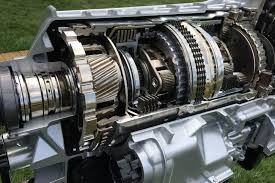
Compatibility verification is the most critical step in any used Ford transmission purchase. Ford’s broad vehicle lineup and the many variants within each transmission family make it easy to accidentally purchase an incompatible unit without careful verification:
Use your VIN as the primary compatibility reference. The eighth digit of your VIN identifies the engine and the combination of engine and model year determines the correct transmission specification. Always provide your full VIN to the seller and ask them to cross-reference against their inventory.
Confirm the transmission code stamped on the case. Ford stamps an identification tag on each transmission that includes the transmission code, build date, and calibration information. Matching this code to your vehicle’s original unit is the most reliable compatibility verification.

Verify the transmission control strategy. Ford transmissions from different model years may use different electronic control strategies even when they appear physically identical. A transmission with a different control calibration may not shift correctly in your vehicle without PCM reprogramming.
Check the flexplate and torque converter compatibility. The flexplate bolt pattern and torque converter pilot dimensions must match between the replacement transmission and your engine. Mismatches prevent proper assembly.
Confirm the output shaft and driveshaft interface. For rear-wheel-drive applications, the output shaft spline count and diameter must match the driveshaft yoke. Front-wheel-drive applications must have matching axle shaft interfaces.
Used Ford Transmission for Sale: Complete Buyer’s Guide
Searching for a used Ford transmission for sale puts you in one of the largest and most well-supplied segments of the automotive replacement parts market. Ford has been one of America’s most prolific automakers for over a century, producing millions of vehicles across an enormous range of platforms, from the best-selling F-150 pickup to the popular Fusion sedan, the capable Explorer SUV, and the iconic Mustang. This production volume means that used Ford transmissions are more widely available than those for almost any other manufacturer, which is both an advantage and a complication. The broad availability means competitive pricing and multiple sourcing options, but it also means navigating a marketplace where quality varies enormously and compatibility verification is absolutely essential. This guide gives you the knowledge to find, evaluate, and purchase a quality used Ford transmission with confidence.
Ford’s Major Transmission Families
Ford has used a wide range of transmissions across its vehicle lineup over the decades. Understanding the major families helps narrow your search and ensures you are looking at the correct units for your specific vehicle:

4R70W and 4R75W — Four-speed rear-wheel-drive automatics used extensively in F-150, Mustang, Crown Victoria, Mercury Grand Marquis, and Lincoln Town Car applications. One of the most widely available and well-understood Ford transmissions in the used parts market. The 4R75W is an upgraded version with improved torque capacity.
6R80 — The six-speed automatic used in F-150, Mustang, and Explorer from approximately 2009 onward. A robust and capable unit that replaced the 4R70W family. Widely available from salvage F-150s and Mustangs.
6F35 — The six-speed automatic used in front-wheel-drive and all-wheel-drive applications including the Fusion, Escape, Edge, Flex, and Taurus. One of the most commonly replaced Ford transmissions due to its broad application and documented torque converter shudder issues.
6F50 and 6F55 — Higher-capacity variants of the 6F35 used in larger or higher-torque front-wheel-drive applications including the Taurus SHO and Edge with the 3.5L EcoBoost engine.
10R80 — The ten-speed automatic introduced in the F-150 and Mustang GT from 2017 onward. A newer and more complex unit with more limited used parts availability but growing supply as donor vehicles accumulate mileage.
PowerShift DPS6 — The controversial six-speed dual-clutch automatic used in the Ford Focus and Fiesta. Well-documented issues with clutch wear and shuddering make sourcing history particularly important for this unit.
CFT30 — The continuously variable transmission used in the Ford Freestyle and early Ford Edge. A specialized unit requiring specific CVT fluid and a CVT-experienced technician for installation and service.
Common Reasons Ford Transmissions Need Replacement
Understanding why Ford transmissions fail helps you ask the right questions when evaluating a used replacement:
Torque Converter Clutch Shudder — Particularly prevalent in the 6F35 used across multiple Ford models. Degraded MERCON LV fluid causes TCC slip that eventually progresses from a shuddering symptom to mechanical TCC damage requiring replacement.
Valve Body Wear — The hydraulic valve body that controls shift timing and clutch engagement pressure wears over time, particularly when fluid changes are deferred beyond recommended intervals. Worn valve bodies cause erratic shifting, delayed engagement, and solenoid-related fault codes.
4R70W Sun Shell Failure — A known weakness in the 4R70W used in rear-wheel-drive Ford applications. The sun shell can fracture under high-torque conditions, causing sudden loss of multiple gears. Many quality remanufactured 4R70W units include an upgraded hardened sun shell.
6R80 Torque Converter Issues — The 6R80 can develop torque converter shudder and converter failure at higher mileages, particularly in F-150s used for towing near their maximum rated capacity.
PowerShift Clutch Wear — The DPS6 dual-clutch transmission in the Focus and Fiesta is notorious for clutch pack wear, hesitation, and shudder due to the inherent challenges of a dry dual-clutch design in stop-and-go driving conditions.
Solenoid Failures — Electronic shift solenoids across all Ford automatic transmission families are documented wear items that cause erratic shifting, stuck gears, and transmission fault codes when they fail.
What to Inspect Before Buying a Used Ford Transmission
A quality used Ford transmission purchase requires more than confirming the part number. Ask the seller to provide or confirm the following:
Mileage documentation — Request the odometer reading from the donor vehicle’s title or a copy of the salvage paperwork. Never rely on verbal mileage claims alone.
Fluid condition report — A seller who inspected the fluid before listing can describe its color, smell, and clarity. Dark, burnt-smelling, or metallic-particle-laden fluid indicates internal wear regardless of stated mileage.
Solenoid function testing — The electronic solenoids that control shift timing should be tested before the transmission is listed. Non-functioning solenoids are a significant concern and add repair cost to the project.
External seals and gaskets condition — Ask about the condition of the pan gasket, output shaft seals, and cooler line fittings. External leaks indicate maintenance history issues and add cost to the installation.
Fault code history — If the seller has access to the donor vehicle’s scan tool history, transmission-related fault codes stored in the PCM provide valuable insight into the transmission’s condition prior to removal.
Pricing for Used Ford Transmissions
The broad availability of used Ford transmissions means pricing is generally competitive, though it varies significantly by model and unit:
4R70W or 4R75W: $300 to $900 depending on mileage
6R80 from F-150 or Mustang: $600 to $1,800
6F35 from Fusion or Escape: $400 to $1,200
10R80 from newer F-150 or Mustang: $1,200 to $3,000 due to limited donor vehicle availability
PowerShift DPS6 from Focus or Fiesta: $400 to $1,000 but carry significant risk without clutch condition documentation
CFT30 CVT from Freestyle: $500 to $1,200
Remanufactured versions of all the above typically carry a 100 to 200 percent premium over used pricing but include warranty coverage and addressed failure points.
Ford Transmission Fluid Specifications
Using the correct fluid in a Ford transmission is non-negotiable for longevity and proper function:
MERCON LV — Required for the 6F35, 6F50, 6R80, and 10R80. This is a low-viscosity fluid that is not interchangeable with MERCON V or Dexron VI despite similar names.
MERCON V — Used in older Ford applications including the 4R70W and 4R75W. Backwards compatible with earlier MERCON specification applications.
Ford CVT Fluid — Required for the CFT30 CVT in the Freestyle. Not interchangeable with any conventional ATF.
Always verify the correct fluid specification for your specific model and year before performing any fluid service on a used replacement transmission.
Installation Considerations for Used Ford Transmissions
Ford transmission installation complexity varies significantly by model:
Rear-wheel-drive trucks and Mustangs with the 4R70W or 6R80 are among the most straightforward installations with labor typically running $600 to $1,200
Front-wheel-drive Fusion, Escape, and Edge with the 6F35 are more complex due to the transverse layout and axle shaft removal required, with labor typically running $800 to $1,600
The 10R80 in newer F-150s requires PCM calibration after installation due to adaptive shift learning, adding time and cost to the process
The PowerShift DPS6 requires clutch break-in procedures and TCU adaptation after installation
Frequently Asked Questions
How much does a used Ford transmission cost? Prices range from $300 for a common 4R70W to $3,000 for a newer 10R80. Most commonly replaced units like the 6F35 and 6R80 fall between $400 and $1,800 depending on mileage and condition.
What is the most reliable Ford automatic transmission? The 4R70W and 6R80 are widely regarded as Ford’s most durable automatic transmissions for rear-wheel-drive applications. The 6F35 is capable but requires diligent MERCON LV fluid maintenance to reach its potential longevity.
How long does a used Ford transmission last? A quality used transmission from a documented low-mileage donor can provide 100,000 miles or more of additional service with proper fluid maintenance.
What fluid does a Ford 6R80 transmission use? MERCON LV automatic transmission fluid. Do not substitute MERCON V, Dexron VI, or generic ATF. Using the wrong fluid causes shift quality degradation and accelerated wear.
Can I use a Ford F-150 transmission in my Mustang? Possibly, as both use the 6R80, but the specific calibration and output shaft configuration must be verified for compatibility. Always confirm by transmission code rather than assuming platform compatibility.
Is the Ford PowerShift DPS6 worth buying used? Only with specific documentation of clutch condition and a warranty from the seller. The DPS6’s clutch wear history is the critical variable and is difficult to assess without specific testing.
How do I find the right used Ford transmission for my vehicle? Provide your full VIN to the supplier and ask them to cross-reference the transmission code. A reputable supplier will confirm compatibility before processing your order.
Turbo Auto Parts: Your Source for Used Ford Transmissions
For every Ford model and every transmission type in the Ford lineup, Turbo Auto Parts is your most reliable source for used Ford transmissions for sale. Our inventory covers the full range of Ford transmission families, from the proven 4R70W and robust 6R80 to the 6F35, 10R80, and everything in between. Every transmission we sell is sourced from documented donor vehicles, inspected for fluid condition and solenoid function, and backed by our warranty program. Our Ford drivetrain specialists verify compatibility with your VIN before every order and are available to answer technical questions throughout the process. Whether you are repairing an F-150, Mustang, Fusion, Escape, or any other Ford vehicle, Turbo Auto Parts delivers the quality, documentation, and support that makes your transmission replacement successful. Contact our team today and find the right used Ford transmission at a price that makes the repair worthwhile.





