
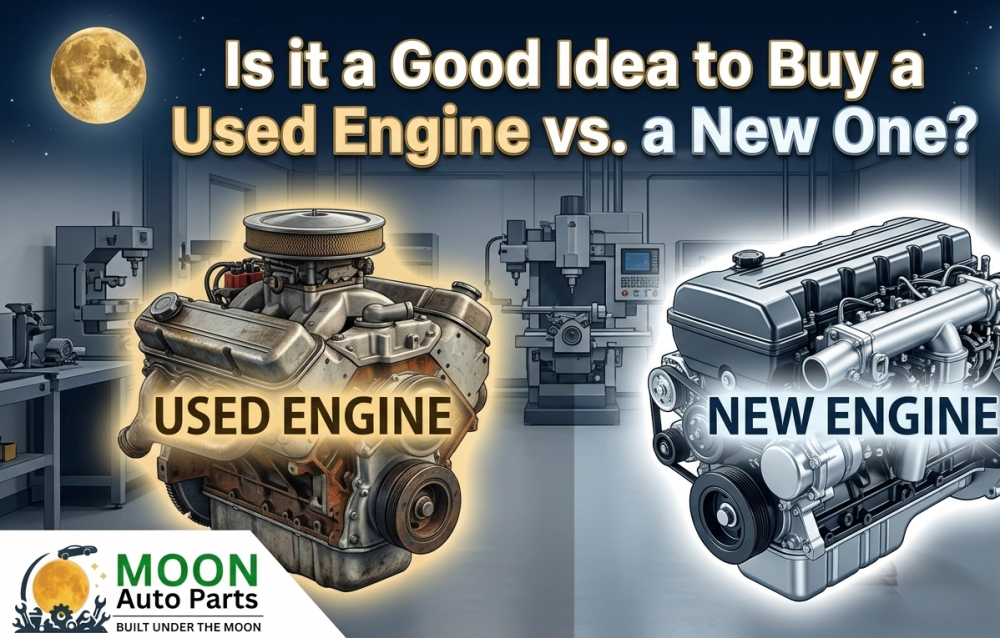
When your vehicle needs an engine replacement, one of the first questions you will face is whether to buy used, remanufactured, or new. Each option comes with distinct trade-offs in cost, reliability, and availability. This guide breaks down the honest pros and cons of each choice so you can make the decision that is right for your vehicle and your budget.
Understanding Your Options
Before comparing, it helps to define each engine type:
Used (Also Called "Salvage" or "Pull") Engine: An engine removed from a donor vehicle, sold as-is or with minimal testing. Mileage varies widely.

Remanufactured Engine: A used engine that has been completely disassembled, cleaned, and rebuilt to OEM specifications using new or reconditioned parts. Also called "reman" engines.
New OEM Engine: A brand-new engine ordered directly from the vehicle manufacturer. These are the most expensive option and are not always available, particularly for older vehicles.
New Aftermarket Engine: A newly manufactured engine produced by a third party. These exist for some high-demand applications, particularly older models and commercial vehicles.
The Case for Buying a Used Engine
Cost is the primary advantage of used engines. Depending on the make, model, and engine family, a used engine can cost 50–80% less than a remanufactured unit and even more compared to a new OEM engine. For older vehicles where a large repair investment may not be justified, a used engine is often the most financially sensible path.
Used engines are also immediately available in most cases. If your salvage yard or engine supplier has the right unit in stock, turnaround time is short.

The main risk with used engines is uncertainty. Without knowing the full history of the donor vehicle, you are making an educated guess about the engine's remaining life. However, this risk can be substantially mitigated by buying from reputable suppliers who test and document their inventory.
The Case for Buying a Remanufactured Engine
A quality remanufactured engine offers the best balance of reliability and value. Because reman engines are rebuilt to OEM tolerances with new wear components — bearings, rings, seals, and in many cases new pistons — they effectively start life over. Many come with 12-month or even 36-month limited warranties.
The cost premium over a used engine is real — typically 60–100% more — but what you gain is predictability. You know the engine's internal condition because it was inspected, measured, and rebuilt to specification.
For high-value vehicles or daily drivers where reliability is paramount, remanufactured engines are the smart long-term investment.
When Does a New Engine Make Sense?
New OEM engines are almost exclusively justifiable in specific circumstances:
- A vehicle that is nearly new and under the manufacturer's powertrain warranty
- A high-value or low-production vehicle where used engines are scarce and premiums are expected
- A commercial or fleet vehicle where uptime and long-term predictability justify the higher cost
For the typical private owner replacing an engine on a five-to-twelve-year-old vehicle, a new OEM engine is rarely cost-effective. The vehicle's depreciated market value will almost never justify it.
Factors That Tip the Decision
Beyond cost, several factors should influence your decision:
Vehicle age and value: For vehicles with a high current market value relative to repair cost, remanufactured or new makes sense. For lower-value older vehicles, used is the pragmatic choice.
Engine availability: For popular domestic engines like GM LS units, Ford Coyote engines, or common Japanese four-cylinders, used supply is abundant and pricing is competitive. For rarer imports or discontinued platforms, remanufactured may be the only quality option.
Your mechanic's recommendation: Experienced mechanics often have preferences based on what they have seen succeed and fail over the years. Their insight is valuable.
Your intended holding period: If you plan to keep the vehicle for 10 more years, invest in the best quality engine you can afford. If you plan to sell in two years, a used engine may be the smarter financial call.
Tips for Reducing Risk with a Used Engine
If you decide a used engine is right for your situation, here are ways to reduce the inherent risk:
- Buy from suppliers who offer compression test documentation
- Insist on a 30-day minimum warranty with a clear return policy
- Ask for the donor vehicle's mileage record
- Have your mechanic replace all wear items — belts, hoses, gaskets — at the time of installation
- Change the oil at 500 miles after the swap and inspect for metal particles
FAQ
Q: Is a remanufactured engine as good as new?
A: In most cases, yes — provided it was remanufactured to OEM specifications by a reputable rebuilder. It should have equivalent internal tolerances and often comes with a comparable or better warranty than an OEM new engine purchase.
Q: What is the average lifespan of a used engine?
A: This depends entirely on the engine's condition and mileage history. A used engine with 60,000 miles from a well-maintained vehicle can last another 100,000+ miles with proper care.
Q: Can I finance a remanufactured engine purchase?
A: Some suppliers and shops offer financing. Additionally, personal auto repair loans through banks and credit unions are an option worth exploring.
Q: How do I know if a used engine is from a flooded vehicle?
A: Inspect the engine for water staining, rust on internal surfaces (check the oil fill cap and dipstick), and corrosion on electrical connectors. A flooded engine should be avoided entirely.
Conclusion
There is no single right answer to the used vs. new engine debate — it depends on your vehicle, your budget, and how long you plan to keep the car. For most owners balancing cost and reliability, a quality used engine from a verified source is the practical sweet spot. Moon Auto Parts maintains a well-stocked inventory of inspected used engines, making it a strong starting point for your engine replacement search.
Read Also: Looking for Advice on Buying a Used Nissan Engine





