
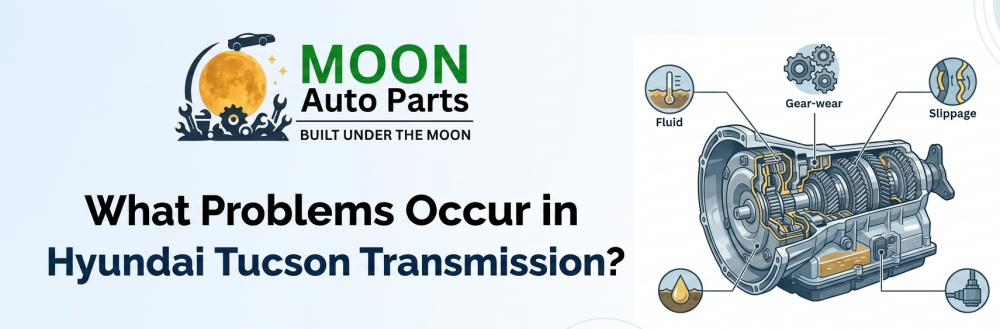
The Hyundai Tucson is a well-regarded compact SUV praised for its stylish design, comfortable ride, and solid fuel economy. However, beneath the surface, a number of owners have experienced frustrating and sometimes dangerous Hyundai Tucson Transmission Problems that have affected both daily drivability and long-term reliability. These issues span multiple model years and transmission types from traditional automatics to the more complex dual-clutch systems introduced in newer generations. Understanding the most common problems, their symptoms, and their causes can help Tucson owners catch warning signs early and avoid the steep cost of major repairs or full Tucson transmission replacement. Here's a comprehensive look at what can go wrong and what to watch for.
1. Delayed or Rough Gear Shifting
One of the most frequently reported complaints among Tucson owners is harsh or jerky gear shifting. Instead of smooth, seamless transitions between gears, drivers experience sudden jolts or lurching sensations during acceleration or when the transmission changes gears at highway speeds.
This issue is particularly common in models equipped with automatic and dual-clutch transmissions. The root causes can range from worn transmission fluid and degraded clutch packs to software calibration problems within the transmission control system. In many cases, a software update or fluid flush resolves the issue temporarily, but persistent rough shifting often signals deeper internal wear that requires more involved repairs.

2. Hesitation or No Acceleration
Several Tucson model years particularly 2016 and 2017 have been associated with alarming acceleration hesitation. Drivers report pressing the gas pedal and experiencing a significant delay before the vehicle actually moves forward. In more serious cases, the car fails to move at all for a brief but dangerous moment, especially when pulling into traffic from a stopped position.
This symptom is closely tied to Hyundai Tucson Transmission Problems in the dual-clutch system, where engagement between the clutch and drivetrain is inconsistent or delayed. The issue poses a real safety risk in situations that require immediate forward movement, such as merging onto a highway or crossing an intersection.
3. Transmission Slipping
Transmission slipping is another serious issue reported across several Tucson generations. When slipping occurs, the engine RPM climbs as expected during acceleration, but the vehicle doesn't gain speed in proportion — creating a disconnected, powerless feeling that can be disorienting and dangerous.
Slipping is typically caused by worn clutch components, low or degraded transmission fluid, or internal mechanical failure. On the highway, slipping during an overtaking maneuver can put the driver in a genuinely hazardous situation. If you notice your engine revving higher than normal without a corresponding increase in speed, it's important to have the Hyundai Tucson Transmission inspected by a qualified technician as soon as possible.
4. Delayed Engagement
A noticeable pause when shifting from Park to Drive or from Drive to Reverse is another common complaint. Rather than responding immediately, the vehicle hesitates for several seconds before the transmission engages and the car begins to move.
This delayed engagement is often linked to internal wear within the transmission, low fluid pressure, or issues with the valve body that controls hydraulic fluid flow. While it may seem like a minor inconvenience at first, delayed engagement typically worsens over time and can be an early indicator of more significant mechanical deterioration ahead.
5. Complete Transmission Failure
Perhaps the most alarming issue reported by Tucson owners is premature and complete transmission failure. In some cases, total failure occurs between 80,000 and 120,000 miles — well before many owners expect to face such a major repair. When complete failure strikes, the vehicle may refuse to move, display persistent warning lights, or go into a limp mode that limits speed and performance.
Complete failure almost always requires either a full rebuild or a full replacement. For owners facing this scenario, sourcing a quality used Hyundai Tucson Transmission from a verified, low-mileage donor vehicle can be a significantly more affordable path than purchasing a brand-new OEM unit. A well-sourced used unit with documented mileage and warranty coverage can restore the vehicle to reliable operation at a fraction of the new-part cost.
6. Dual-Clutch Transmission (DCT) Issues
Hyundai's 7-speed dual-clutch transmission (DCT), introduced across several Tucson trims, has been at the center of numerous owner complaints and even formal recalls. The DCT is designed for improved fuel efficiency and quicker gear changes, but its real-world performance has often fallen short of expectations.
Common DCT-related symptoms include jerky, uneven movement at low speeds, sudden forward lurching in stop-and-go traffic, and overall poor drivability in urban driving conditions. These characteristics are not just uncomfortable — they erode driver confidence and raise genuine safety concerns. Hyundai has issued software updates and, in some cases, recalls to address DCT-related behavior, but results have been mixed for many affected owners.
7. Transmission Control Module (TCM) Failure
The Transmission Control Module is the electronic brain behind your Tucson's gear shifting logic. When the TCM malfunctions, the consequences can be wide-ranging — erratic or unpredictable gear shifts, sudden loss of power, and illuminated warning lights on the dashboard including the check engine light.
TCM failure may result from electrical faults, software corruption, or physical damage to the module itself. Depending on the diagnosis, the fix may be as straightforward as a software reprogram or as involved as a full module replacement. Either way, TCM issues should never be ignored, as they can lead to unsafe driving conditions if left unaddressed.
8. Overheating and Fluid-Related Issues
Transmission fluid is the lifeblood of any automatic or dual-clutch system. When fluid breaks down due to age, contamination, or poor circulation, internal components are exposed to excessive heat and friction. Overheating accelerates wear on clutch packs, seals, and the valve body — dramatically shortening the overall lifespan of the transmission.
Hyundai recommends regular transmission fluid changes as part of routine maintenance, yet many owners skip this service until problems emerge. Staying on top of fluid condition is one of the simplest and most effective ways to reduce the risk of overheating and extend the life of your Tucson's drivetrain.
Conclusion
Hyundai Tucson Transmission Problems range from frustrating daily inconveniences to serious mechanical failures that demand immediate attention. Model years 2016 through 2018 have drawn the most complaints, particularly around dual-clutch transmission behavior, slipping, and premature failure. Recognizing early symptoms jerking, hesitation, slipping, or delayed engagement and acting quickly can mean the difference between a manageable repair and a complete transmission replacement. Regular maintenance, timely fluid changes, and professional diagnostics are your best defense. If you're already facing transmission failure and need a reliable, affordable replacement, sourcing a quality used Hyundai Tucson Transmission from a trusted supplier is the smart move. Moon Auto Parts offers verified low-mileage units with warranty support, making them a dependable choice for Tucson owners looking to get back on the road without overspending.
Read Also: 7 Benefits of Choosing a Used Nissan Maxima Transmission





