Health and social care is one of the fastest-growing sectors in the UK, offering rewarding career opportunities for people who want to make a real difference in others’ lives. Whether you are just starting out or looking to progress into a leadership role, there are a wide range of qualifications designed to support your journey.
In this guide, we’ll explore the different health and social care qualifications available, who they are for, and how they can help you build a successful career.
Why Health and Social Care Qualifications Matter
Having the right qualifications is essential for working in care. These courses help you develop practical skills, understand regulations, and deliver safe, high-quality support to individuals.

Most roles in the UK care sector require at least a Level 2 or Level 3 qualification, as these provide core knowledge such as safeguarding, communication, and person-centred care.
Entry-Level Qualifications (Beginner Level)
If you are new to the care sector, entry-level qualifications are the best place to start.
1. Care Certificate
The Care Certificate is an induction programme designed for new care workers. It covers essential topics like:
- Safeguarding
- Infection control
- Communication skills
- Duty of care
This course provides a strong foundation for anyone starting their career.
Level 2 Qualifications – Starting Your Career
Level 2 Diploma in Care (RQF/NVQ)
This qualification is ideal for:
- Care Assistants
- Support Workers
- New entrants in care
It typically takes around 6–9 months to complete and focuses on developing basic care skills and knowledge.
👉 This is often the minimum requirement to work in many care roles.
Level 3 Qualifications – Career Progression
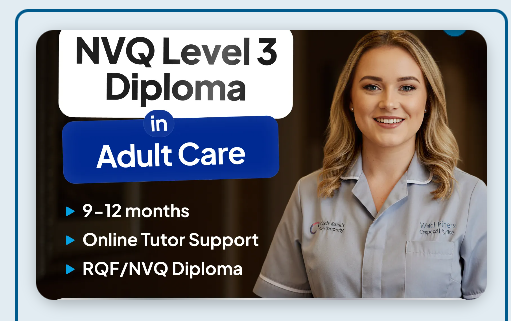
Level 3 Diploma in Adult Care (RQF/NVQ)
This course is suitable for:
- Experienced care workers
- Senior Care Assistants
- Supervisory roles
It helps you:
- Take on more responsibility
- Develop leadership skills
- Support others in care settings
The course usually takes 9–12 months and is one of the most popular qualifications in the sector.
Level 3 Diploma in Residential Childcare
If you want to work with children and young people, this qualification is the right choice. It focuses on:
- Child development
- Safeguarding children
- Supporting vulnerable young people
Level 4 Qualifications – Advanced Practice
Level 4 Diploma in Adult Care
This qualification is designed for:
- Senior care staff
- Team leaders
- Supervisors
It builds advanced skills in:
- Care planning
- Leadership
- Managing complex situations
Typically, it takes 12–15 months to complete.
Level 5 Qualifications – Leadership & Management
Level 5 Diploma in Leadership and Management for Adult Care
This is a high-level qualification for:
- Registered Care Managers
- Deputy Managers
It focuses on:
- Leadership and management
- Regulatory compliance (CQC standards)
- Service improvement
This qualification is essential if you want to run or manage a care service.
Level 5 Residential Childcare (Management)
For those managing children’s services, this qualification develops skills in:
- Team leadership
- Child protection
- Service management
Apprenticeships in Health and Social Care
Apprenticeships combine work and study, allowing you to earn while you learn.
Example:
- Level 3 Lead Adult Care Worker Apprenticeship
These programmes are ideal for:
- Hands-on learners
- Individuals already working in care
They help build real-world experience alongside recognised qualifications.
Flexible Learning Options
One of the biggest advantages of training with Access Skills is flexibility.
You can benefit from:
- Online learning
- Tutor support
- Workplace assessments
- Flexible start dates
Courses can range from short training sessions to full diplomas lasting up to 16 months.
Funding and Support
Many health and social care qualifications are eligible for funding, including:
- Government-funded programmes
- Advanced Learner Loans
- Employer-supported training
This makes it easier to access high-quality training without paying full costs upfront.
Career Opportunities After Qualification
With the right qualification, you can work in:
- Care homes
- Hospitals
- Community care
- Residential childcare
Job roles include:
- Care Assistant
- Support Worker
- Senior Care Worker
- Care Manager
The sector continues to grow, meaning strong job security and career progression opportunities.
Conclusion
Health and social care qualifications provide a clear pathway from entry-level roles to leadership positions. Whether you start with a Care Certificate or aim for a Level 5 management qualification, each step helps you build skills, confidence, and career opportunities.
If you’re looking for flexible, accredited, and career-focused training, Access Skills offers a wide range of Level 2 to Level 5 qualifications designed to support your journey in the care sector.