The United States of America remains the undisputed leader in global higher education, offering a vast array of programs that cater to every academic interest and professional ambition. For millions of aspiring scholars, the dream of walking through the campuses of esteemed American universities is a powerful motivator for personal and professional growth. However, transitioning from a prospective applicant to a registered student involves navigating a meticulous legal process. The most critical step in this journey is successfully applying for a Student Visa USA, a document that not only grants entry into the country but also defines the parameters of your stay and your rights as an international resident. As we move into 2026, understanding the latest regulatory shifts and interview expectations is essential for anyone looking to call the US their academic home.
The Landscape of American Education in 2026
In 2026, the US education system has become more inclusive yet more technologically advanced. Universities are now focusing heavily on hybrid learning models and STEM (Science, Technology, Engineering, and Mathematics) fields to meet the demands of a rapidly changing global economy. For international students, this means more opportunities for research and practical training. However, with increased opportunities comes increased scrutiny during the visa application phase, making it vital to present a flawless case to the consular officer.
Choosing the Right Visa Category: F-1 vs. M-1 vs. J-1
Before starting your application, you must identify which visa category fits your program.
- F-1 Visa: This is for students attending academic institutions or English language programs. It is the most common student visa.
- M-1 Visa: This is for vocational or non-academic programs (e.g., flight school or technical training).
- J-1 Visa: This is for exchange visitors participating in programs that promote cultural exchange.
Step 1: Securing the I-20 and SEVIS Registration
Your journey officially begins when an American institution accepts your application. Upon acceptance, the school’s Designated School Official (DSO) will generate your I-20 form.
The Importance of SEVIS
The Student and Exchange Visitor Information System (SEVIS) is a web-based system that the Department of Homeland Security (DHS) uses to maintain information on non-immigrant students. Once you receive your I-20, you must pay the SEVIS I-901 fee. This fee is mandatory and covers the administrative costs of the system that tracks your legal status throughout your studies.
Step 2: Financial Documentation and Asset Verification
A significant hurdle for many applicants is proving they can afford the high cost of US education. In 2026, consular officers are looking for "liquid" evidence—funds that are readily available for use.
- Bank Statements: Most consulates require at least six months of transaction history.
- Affidavits of Support: If a relative is sponsoring you, they must provide a signed legal document promising to cover your costs.
- Scholarship Letters: If you have received financial aid from the university, ensure you have the official award letter.
It is crucial to show that you have enough funds to cover the "Total Cost of Attendance" listed on your I-20, which includes tuition, housing, books, and health insurance.

Step 3: Navigating the DS-160 and Scheduling the Interview
The DS-160 is the primary application form for a US student visa. It is a comprehensive document that asks for your personal history, family background, and travel records.
Tips for a Perfect DS-160:
- Consistency is Key: Ensure the address and contact details match your I-20.
- Photo Requirements: Your digital photo must meet strict US government specifications (white background, no glasses, specific dimensions).
- Security Questions: Be honest and thorough when answering questions about your previous travel or any legal history.
Step 4: The Visa Interview - Personal Presentation and Communication
The visa interview is often perceived as an interrogation, but it is actually a conversation designed to verify your intentions. Consular officers are trained to look for three main things:
- Academic Intent
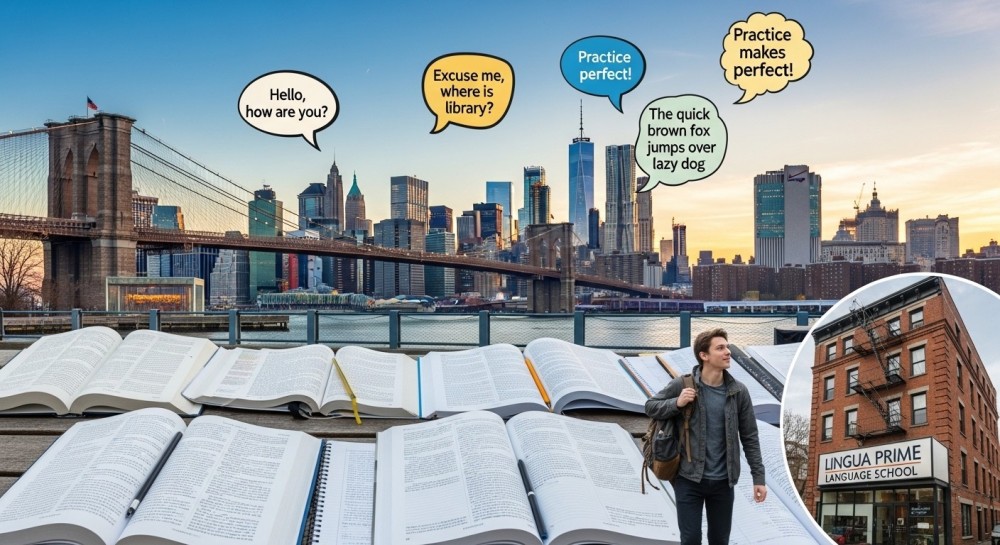
You must prove that you are a serious student. This means knowing your program details, why you chose that specific university, and how the degree will help your future career. If you are going to a language school like Lingua Prime, explain how improving your English is a prerequisite for your professional goals.
- Ability to Pay
Even though you have submitted documents, you may be asked verbal questions about your sponsor's income and how they can afford to send you abroad.
- Intent to Return (Ties to Home Country)
This is the most common reason for 214(b) denials. You must convince the officer that you have a reason to return to your home country after your studies. This could be a family business, property, or a specific career path that is only available in your home country.
Step 5: Preparing for Arrival and Post-Visa Responsibilities
Once your visa is approved and stamped in your passport, the preparation for departure begins.
- Port of Entry (POE): Having a visa does not guarantee entry. A Customs and Border Protection (CBP) officer at the airport will conduct a final check of your I-20 and visa.
- Maintaining Status: Once in the US, you must report to your DSO within 30 days of the program start date.
- Address Updates: Any time you move, you must update your address in the SEVIS system within 10 days.
Conclusion: Embracing the American Academic Journey
Obtaining a Student Visa USA is the first major test of your resilience and organizational skills. While the process is rigorous, the rewards of an American education are life-changing. From networking with global industry leaders to experiencing a melting pot of cultures, the US offers an environment where students can truly thrive. By staying informed, preparing your documentation with precision, and communicating your goals clearly, you can successfully navigate the complexities of US immigration in 2026.
Educational institutions like Lingua Prime remain dedicated to assisting international students in bridging the gap between their current skills and the requirements of American universities. With the right support and a clear strategy, your path to the United States is closer than you think.
Frequently Asked Questions (FAQs) - 2026 Edition
Can I work on a student visa in the USA?
Yes, F-1 students are generally allowed to work on-campus for up to 20 hours per week during the semester and full-time during breaks. Off-campus work requires special authorization like CPT or OPT.
What should I do if my visa interview is scheduled after my program start date?
You should contact your university's DSO immediately. They may issue you a "Deffered I-20" with a later start date, or you can try to request an emergency interview appointment at the consulate.
Do I need to pay the SEVIS fee again if I was denied once?
If you reapply within 12 months for the same program, you usually do not need to pay the SEVIS fee again. However, you must pay the visa application (MRV) fee for every new interview.
How long can I stay in the USA after my program ends?
F-1 students have a "Grace Period" of 60 days after their program completion date or OPT end date to either leave the US, transfer to another school, or change their visa status.
Is the visa interview conducted in my local language or English?
Since you are going to study in the US, the interview is almost always conducted in English to verify your language proficiency, especially if your I-20 is for an academic degree.