

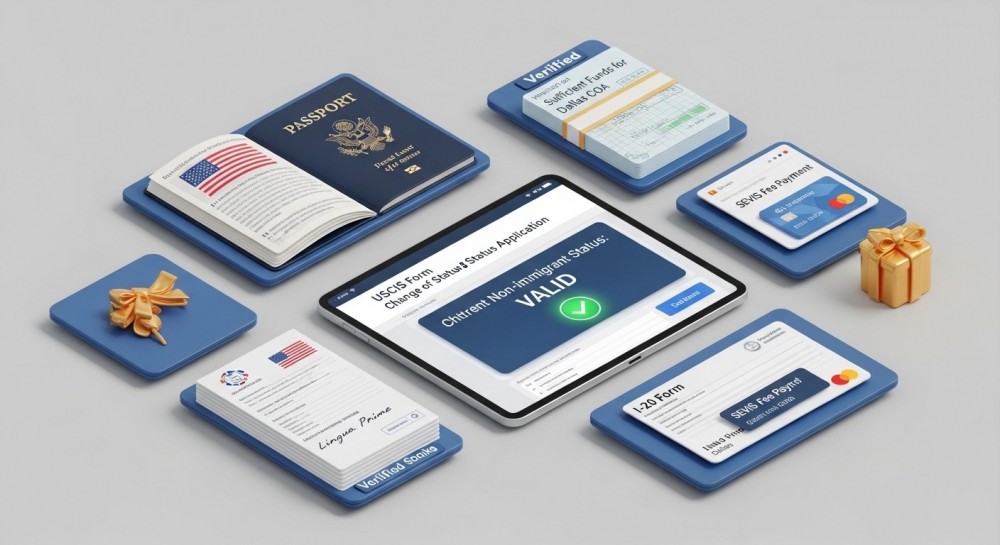
The decision to transition from a temporary non-immigrant status to a full-time academic career is a pivotal moment for any international resident in the United States. Dallas, a city that serves as a global powerhouse for commerce, technology, and healthcare, offers an unparalleled environment for individuals looking to reinvent their professional trajectories through higher education. For those currently holding visitor (B-1/B-2) or various work-related visas, the opportunity to adjust their legal standing while remaining in North Texas is a strategic move that saves time and resources. By choosing to Change status to F1 in Dallas, applicants can navigate the United States Citizenship and Immigration Services (USCIS) protocols internally, avoiding the complexities of international travel and consular interviews. This process is especially beneficial for individuals in the Dallas-Fort Worth (DFW) area who wish to take advantage of specialized training programs at prestigious institutions or language centers like Lingua Prime, which provide the essential foundations for success in the American academic system.
The Strategic Value of the North Texas Education Hub
Dallas is more than a bustling metropolis; it is a center of intellectual development. Transitioning your status while staying in Dallas allows you to remain connected to one of the most diverse and fastest-growing economies in the U.S. By enrolling in local programs, students can build professional networks in DFW while completing their studies, making the eventual move into Optional Practical Training (OPT) much more effective.
Phase 1: Foundational Eligibility and Legal Compliance
A successful change of status application is built on meticulous documentation and a clear understanding of federal regulations.

- Maintaining Lawful Non-Immigrant Status
The most critical factor in a Change of Status (COS) application is that you must be in a valid, legal status on the day your Form I-539 is filed with USCIS. If your authorized stay (as per your I-94) has expired, you are generally barred from changing status within the country. In such instances, you must depart and re-enter with a new F-1 visa stamp.
- Avoiding the "Gap" in Status
USCIS requires that you maintain a valid status until at least 30 days before your F-1 program begins. If your current status expires more than 30 days before the start date on your I-20, you must file an additional application to "bridge the gap." This ensures you are never in a period of "unlawful presence," which could lead to a denial.
Phase 2: The Role of the I-20 and Institutional Sponsorship
The Form I-20 is the backbone of your student status. It is the document that certifies your acceptance into a full-time program.
- Admission at Lingua Prime: Many international residents in Dallas begin their journey by enhancing their English language skills. Lingua Prime is a SEVP-certified institution that provides the necessary I-20 for students changing status specifically for intensive English training.
- Financial Verification for the DFW Metroplex: To secure an I-20, you must prove that you have sufficient liquid assets to cover tuition and a year of living expenses in Dallas. Given the current economic climate in North Texas, showing a robust and stable financial background is essential to satisfy both the school and the government.
Phase 3: The Formal Application – Form I-539 and SEVIS
The administrative part of the transition involves a comprehensive filing with USCIS.
- Preparing the I-539 Package
Your application package should include:

- Your signed I-20 from a Dallas-based school.
- Your current I-94 Arrival/Departure record.
- Evidence of your financial support (bank statements, tax returns).
- The Personal Statement: This is a letter where you explain your "Academic Intent." You must clearly state why you want to study now and how this specific training at Lingua Prime or a university will help you achieve your goals in your home country.
- The SEVIS I-901 Fee
Every international student must pay this federal fee. It is used to maintain the SEVIS database, which tracks your status and school attendance throughout your stay in the U.S.
Phase 4: Proving Non-Immigrant Intent
F-1 is a "non-immigrant" status, meaning you must prove that you do not intend to stay in the U.S. permanently.
- Strong Ties to Home: You must provide evidence that you have a reason to return to your home country. This can include property ownership, a family business, or a clear career path that is only available in your home country.
- Economic Logic: Explain how the skills you learn in Dallas will make you more employable back home. For instance, "Mastering professional English at Lingua Prime will allow me to return home and work as a consultant for multinational firms."
Phase 5: Managing the Wait and Legal Restrictions
While your application is being processed, you are in a "period of authorized stay," but there are strict rules you must follow.
- Premium Processing: USCIS now offers Premium Processing for an extra fee, which guarantees a response in 30 days. This is highly recommended for students who have a firm semester start date.
- The No-Travel Rule: Do not leave the United States while your I-539 is pending. Leaving the country is seen as an automatic withdrawal of your application.
- Study and Work Rules: If you are a B-1/B-2 visitor, you are legally forbidden from starting classes until the F-1 is approved. You also have no work authorization until the status change is official.
Conclusion: Your Pathway to Success in Dallas
The decision to Change status to F1 in Dallas is a gateway to a world of new academic and professional possibilities. While the legal process requires patience and attention to detail, the result is the ability to fully engage with the American educational system in one of the most vibrant cities in the world. By partnering with reputable institutions like Lingua Prime and maintaining a proactive approach to your documentation, you can turn your academic dreams into a reality.
Dallas is a city of opportunity. By securing your F-1 status, you are taking the first step toward a future defined by knowledge, innovation, and global leadership.
Frequently Asked Questions (FAQs) – New Perspective
Can I change my status to F-1 if I have a pending asylum case in Dallas?
This is a very complex legal situation. Having a pending asylum case shows "immigrant intent," which contradicts the "non-immigrant intent" required for an F-1 visa. It is strongly recommended to consult with an immigration attorney before attempting this.
What if my bank statements are from my home country?
That is perfectly fine. As long as the bank statements are in English (or translated) and clearly show the equivalent amount in U.S. dollars, USCIS and schools like Lingua Prime will accept them.
Does the "90-Day Rule" apply to Change of Status?
Yes. USCIS often scrutinizes applications filed within the first 90 days of arrival on a visitor visa, as it might suggest "preconceived intent." It is often safer to file after you have been in the country for at least 90 days.
Can I change from H-1B to F-1 while staying in Dallas?
Yes. Many professionals choose to leave their jobs and return to school. Since H-1B is a "dual intent" visa, the transition is usually smoother, but you still must prove you have a plan to eventually return home after your studies.
If my application is denied, can I appeal?
Yes, you can file a Motion to Reopen or Reconsider, but this is often expensive and time-consuming. Most people choose to leave the country and apply for a visa at a consulate if their internal change is denied.





