

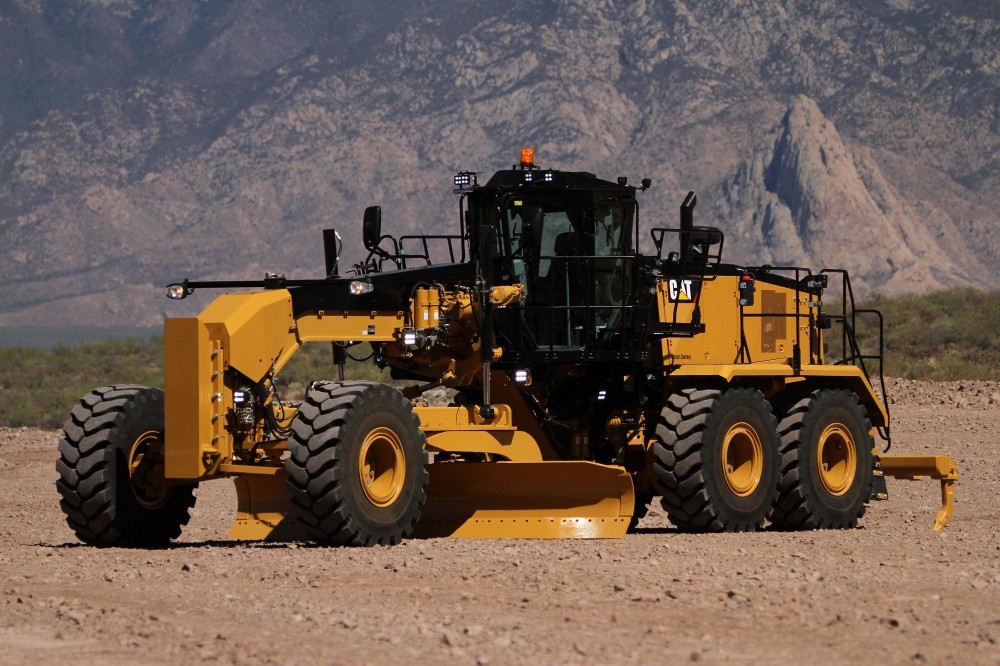
It can be economical to import a used motor grader, but only if you understand the process. The list price is only the beginning when it comes to purchasing motor graders from abroad. Shipping, insurance, port fees, permits, tariffs, taxes, and additional expenses all mount up. Each component of the landing cost is broken down in this guide.
Total Import Cost Components
Import costs include:
Purchase Price & Currency: The price is expressed in the seller's own currency. The USD cost is impacted by currency movements, such as a weak yen or yuan. Make clear who is responsible for paying export fees and the Incoterms (EXW, FOB).

Shipping & Insurance: Heavy machinery is typically transported by sea (Ro-Ro or flat rack); air travel is highly costly. Add marine insurance (~1-2% of value), terminal/port loading, and ocean freight. During months of high demand, carriers frequently impose fuel surcharges or additional costs.
Port & Inland Fees: You pay handling costs at the U.S. port in addition to merchandise processing (0.3464% of value) and harbor maintenance (0.125% of value). Set up heavy-haul trucks after customs (with oversize permits and escorts). Daily stay and remand fees apply to missed collection periods and delayed transfers.
Customs Duties: HTS 8429.20.00 are self-propelled graders. A large number of heavy machinery enter duty-free or at low duty (often 0–5%). (The entire landed cost may still be subject to state sales or use tax; there is no federal import VAT in the United States.)
Additional Tariffs: A 25% U.S. Section 301 tax is applied on graders manufactured in China. The majority of Japanese imports are subject to a 15% duty under the new U.S.-Japan agreement. European (EU/UK) equipment often pays ordinary WTO tariffs, which are typically zero percent.
Bonded Warehouse: Duty payment can be postponed for up to five years if the grader is kept in the U.S. Customs-bonded storage. No U.S. duties are due if the grader is subsequently re-exported without entering U.S. commerce.

Taxes & Hidden Fees
Beyond duties and freight, several hidden fees can also add cost:
Port Charges & Delay: There are port handling costs in addition to MPF (0.3464%) and HMF (0.125%). Delay fines are applied when containers or Ro-Ro slots are held past the free time.
Inland Transport & Surcharges: Special heavy-haul licenses and frequently pilot escorts are needed when transporting a grader overland. Peak Season Surcharges (PSS) are imposed by ocean carriers on imports from Asia into the United States between June and October. Include bank conversion fees if the payment is made in a foreign currency.
Insurance & Miscellaneous: For expensive equipment, marine transportation insurance (~1-2% of machine value) is advised but not required. Port storage costs, agricultural fumigation or inspections, and compliance testing are other possible fees that might cost hundreds of dollars if necessary.
Import Costs by Origin Country
Prices vary based on the exporting nation.
- Japan has a considerable used market for high-quality graders. The United States charges a 15% tariff on Japanese imports. Ocean freight travels reach the West Coast in 20 to 30 days. Monitor the yen/USD exchange rate because a decreasing yen increases your dollar expenses.
- The base price for Chinese graders is often lower. However, there is a 25% US tariff. Expect summer peak-season surcharges and lengthy transit (about 20-30 days). Additional customs checks and currency fluctuation may have an influence on overall costs.
- Germany produces high-quality graders. For EU grades, US MFN duty is frequently 0 percent. It takes approximately 20 to 30 days to travel from the Atlantic to the East Coast. Euro/USD rates influence the landed price, and European dealers may charge VAT (refunded upon export).
- Re-exported machinery from the United States and Europe is commonly sold in the UAE, usually at competitive costs. AED pricing, which is dependent on the US dollar, remains stable. In addition to any local trucking, shipping from Suez to the United States takes approximately 30 to 40 days. Because the United States and the UAE do not have a special trade agreement, treat them as regular origins for duties.
EPA, DOT & Documentation
Imported graders must meet U.S. regulations:
EPA (Emissions): An EPA declaration is required by the U.S. Customs. For the grader's engine, submit EPA Form 3520-1. The engine needs to be certified or retrofitted, or it needs to fulfill U.S. Tier pollution regulations. Fines or denial of entrance may result from noncompliance.
DOT/Transport: Moving a grader on public roads after import usually requires an escort and oversize/overweight licenses. This is a post-entry expense that needs to be scheduled ahead of time.
Customs Documents: Make sure you have the Packing List, EPA 3520-1, Customs Bond, Bill of Lading, Commercial Invoice (including terms, currency, VIN/serial, and complete data), and broker's power of attorney. Errors in these documents (incorrect value, HS code, etc.) cause delays in clearance and may result in fines.
Step-by-Step Cost Breakdown
If you intend to buy motor graders abroad, do the following actions to account for all expenses:
Equipment Purchase: Choose and examine the grader. Once the price, currency, and Incoterm have been agreed upon, pay the seller (as well as any export or auction costs).).
Prep & Shipping: Examine and clean the machine. Obtain export documentation and schedule transportation (Ro-Ro or container). Track the package and pay freight and insurance (the carrier issues the B/L).
U.S. Port Entry & Customs: When your broker arrives, they file the entry. Pay the handling and port fees (HMF, MPF). Pay duties (HTS 8429.20 + any additional tariffs) and submit EPA Form 3520-1.
Final Delivery: After transporting the grader to its destination with the necessary escorts and licenses, check it for damage. The purchase price plus all of the above fees, charges, and taxes make up the entire "landed cost."
Cost-Saving Strategies
These tactics can save costs when purchasing motor graders abroad:
- You can postpone duty at a bonded warehouse for up to five years. No U.S. duty is due if the grader is subsequently exported from bond.
- To reduce hefty fuel/PSS surcharges, stay away from peak season, which is generally June–October on Asia–US lines.
- To avoid cost surges from FX swings, negotiate USD pricing or use forward contracts to lock in exchange rates.
- Verify HS codes, values, and documentation twice. Error-free invoices and proper classification (8429.20.00) expedite clearing and prevent fines.
- When possible, import several computers at once. Fees are spread out and per-unit prices are reduced when one container and entrance are shared.
- Customers can prevent unpleasant surprises at Customs and during delivery if they buy motor graders internationally and budget for all associated costs.





