

The Alfa Romeo Giulia has earned a reputation for sharp handling, elegant Italian styling, and an engaging driving experience. Whether equipped with the turbocharged four-cylinder or the high-performance Quadrifoglio variant, the Giulia delivers impressive performance for its class. However, like many performance-oriented vehicles, it is not without mechanical concerns.
If you own one or are considering buying one, understanding the common issues related to the Alfa Romeo Giulia Engine can help you prepare for maintenance costs and make smarter repair decisions. In this in-depth guide, we’ll explore the most frequently reported engine problems, their causes, warning signs, and potential solutions.
Overview of the Alfa Romeo Giulia Engine Options
Most Giulia models come with a 2.0L turbocharged inline-four engine that balances power and efficiency. The high-performance Quadrifoglio version features a 2.9L twin-turbo V6 derived from Ferrari engineering principles. Both engines are designed for performance, but their advanced engineering also means they rely heavily on precision components, electronics, and proper maintenance.

While the Alfa Romeo Giulia Engine offers impressive acceleration and smooth power delivery, some owners have reported recurring issues that buyers should understand.
1. Oil Consumption and Oil Leaks
One of the most discussed concerns among owners is higher-than-expected oil consumption. Turbocharged engines operate at high temperatures and pressures, which can lead to increased oil usage over time. If oil levels are not monitored regularly, low lubrication can cause internal wear.
In some cases, minor oil leaks have also been reported around seals and gaskets. These leaks may start small but can worsen if ignored. Drivers should watch for oil spots under the vehicle or a burning oil smell during operation.
Regular oil checks and using manufacturer-recommended oil grades can reduce risk. Addressing leaks early prevents more severe engine damage.
2. Cooling System Issues
Cooling system performance is critical in turbocharged engines. Some owners have reported coolant leaks or thermostat malfunctions. If the cooling system fails, the engine may overheat, which can cause serious internal damage.

Warning signs include rising temperature gauges, coolant warning lights, or visible coolant puddles under the vehicle. Overheating should never be ignored, as it can warp cylinder heads or damage head gaskets.
Proper coolant maintenance and routine inspections significantly reduce overheating risks in the Alfa Romeo Giulia Engine.
3. Carbon Buildup in Direct Injection Systems
The Giulia’s turbocharged engine uses direct fuel injection, which improves efficiency and performance. However, direct injection systems can develop carbon buildup on intake valves over time.
Because fuel is injected directly into the combustion chamber rather than over the intake valves, deposits can accumulate. This may lead to rough idling, reduced fuel efficiency, and misfires.
Periodic intake cleaning services help prevent excessive buildup. Drivers who primarily make short trips may experience this issue more frequently because the engine does not consistently reach optimal operating temperature.
4. Electrical and Sensor-Related Problems
Modern vehicles rely heavily on sensors and electronic modules. Some Giulia owners have experienced sensor malfunctions that trigger warning lights or place the vehicle in limp mode.
While not always a direct mechanical failure, faulty sensors can affect how the engine performs. Issues with mass airflow sensors, throttle sensors, or ignition components may reduce power output or cause rough operation.
Software updates and proper diagnostic scanning are essential for resolving these problems efficiently. It’s important not to assume the worst when a warning light appears; many issues are electronic rather than internal engine damage.
5. Turbocharger Wear
Turbochargers enhance performance but also introduce complexity. Over time, turbo components such as bearings and seals can wear, especially if oil changes are delayed or improper oil is used.
Symptoms of turbo wear include whining noises, loss of boost pressure, excessive exhaust smoke, or sluggish acceleration. Regular oil maintenance is crucial because the turbo relies on proper lubrication to function correctly.
If turbo damage occurs, repairs can be expensive. However, early detection often prevents complete failure.
6. Start-Stop System Concerns
Some drivers have reported irregular behavior from the automatic start-stop system. While not strictly an engine defect, frequent restarts may put additional strain on components like the starter motor and battery.
In certain cases, drivers notice hesitation or vibration when the system engages. Ensuring the battery and electrical system remain in strong condition helps minimize these issues.
Is the Alfa Romeo Giulia Engine Reliable?
Despite the issues mentioned above, many owners enjoy years of dependable performance when proper maintenance schedules are followed. The Alfa Romeo Giulia Engine is engineered for driving excitement, but performance-focused designs require attentive care.
Routine oil changes, coolant inspections, and diagnostic checks significantly reduce long-term risks. Skipping maintenance is often the primary cause of major engine failures.
When Replacement Becomes Necessary
In rare cases where internal damage occurs—such as severe overheating, piston failure, or major oil starvation—engine replacement may be more practical than rebuilding.
Choosing an Alfa Romeo used Engine can be a cost-effective alternative to purchasing a brand-new factory engine. A carefully inspected replacement engine can restore vehicle performance while controlling repair expenses.
Working with reputable suppliers is essential. Companies like Moon Auto Parts specialize in inspected replacement engines that undergo quality checks before sale. This ensures buyers receive components that meet performance expectations.
If your original engine has suffered catastrophic damage, sourcing an Alfa Romeo used Engine from a trusted supplier like Moon Auto Parts can help extend your vehicle’s life without exceeding your budget.
Preventive Maintenance Tips
To reduce the likelihood of major issues, follow these best practices:
- Maintain strict oil change intervals using high-quality synthetic oil.
- Monitor coolant levels and inspect for leaks regularly.
- Address warning lights immediately with professional diagnostics.
- Avoid aggressive driving before the engine reaches operating temperature.
- Perform periodic intake system cleaning to reduce carbon buildup.
Proactive maintenance is always more affordable than major repairs.
Final Thoughts
The Alfa Romeo Giulia Quadrifoglio and standard Alfa Romeo Giulia models offer thrilling performance and refined driving dynamics. However, like many turbocharged European vehicles, they require careful maintenance and consistent attention to detail to ensure long-term reliability.
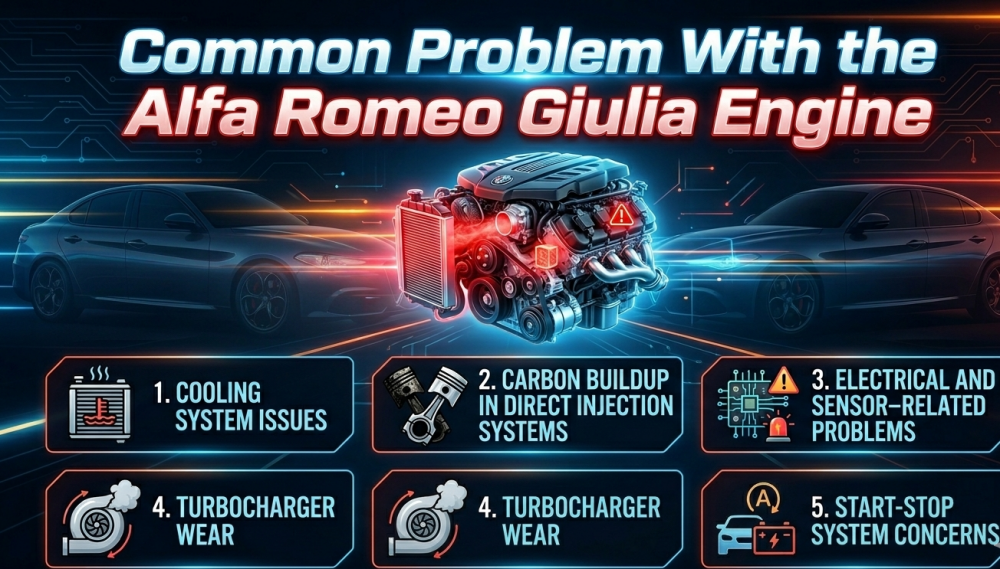
Common concerns with the Alfa Romeo Giulia Engine include oil consumption, cooling system leaks, carbon buildup, sensor malfunctions, and turbo wear. While these issues may initially seem alarming, most can be effectively managed with timely servicing, high-quality oil changes, and routine inspections. Staying proactive with maintenance greatly reduces the risk of major mechanical failure and helps preserve performance.
For drivers facing significant repairs, replacement options such as an inspected Alfa Romeo Giulia Engine from reliable suppliers provide a practical and cost-effective solution. Choosing a trusted source like MoonAutoParts ensures access to quality-tested components that help restore power and dependability. Understanding potential issues in advance allows owners to protect their investment while continuing to enjoy the distinctive performance that defines the Alfa Romeo driving experience.
With routine maintenance and dependable parts sourcing, your Giulia can remain both exciting and reliable for many years to come.





