

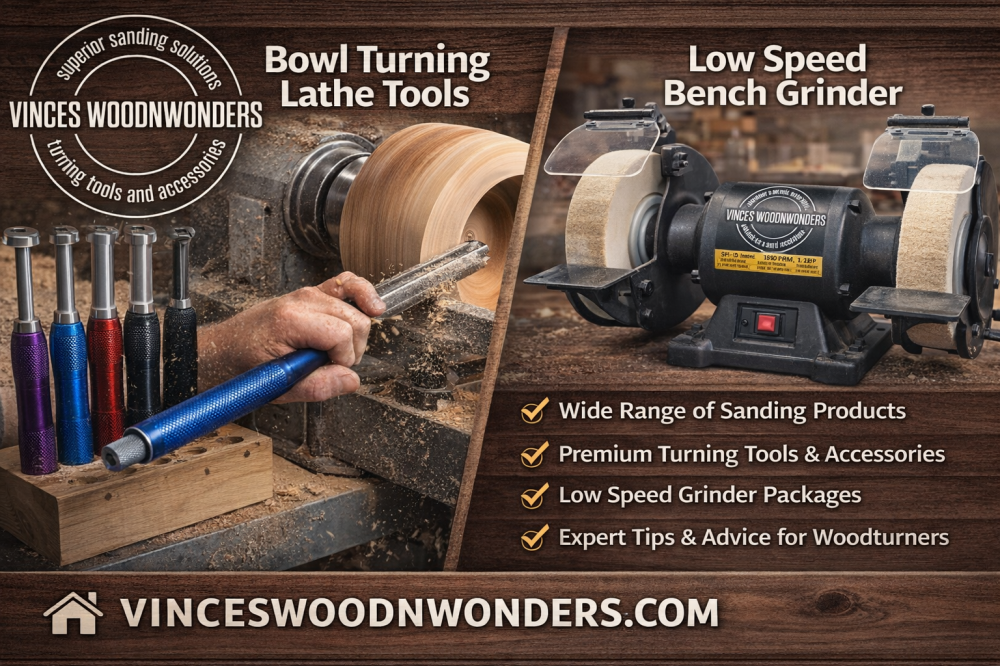
Woodturning has seen a major resurgence in recent years. From handmade home décor trends to sustainable craftsmanship movements, artisans are rediscovering the beauty of shaping raw timber into functional art. At Vinces Wood N Wonders, we believe the foundation of exceptional craftsmanship begins with mastering your bowl turning lathe tools and understanding the critical role of a low speed bench grinder in maintaining peak performance.
In today’s woodworking landscape—where precision, efficiency, and tool longevity matter more than ever—these two elements are inseparable. Let’s explore how they work together to elevate your bowl turning results.
Why Bowl Turning Lathe Tools Matter More Than Ever
Modern woodturning trends emphasize:

- Clean, flowing grain reveals
- Thin-walled bowls
- Live-edge designs
- Eco-conscious material use
- Artisan-quality finishes
Achieving these results depends heavily on your bowl turning lathe tools. These tools are engineered specifically for the dynamic cuts required when shaping curved, hollow forms.
Essential Bowl Turning Tools
A well-rounded setup typically includes:
1. Bowl Gouge
The workhorse of bowl turning. Designed with a deep flute and strong cross-section, it allows smooth shaping and interior hollowing.
2. Spindle Gouge (for detailing)

3. Round-Nose Scraper
Ideal for refining interior curves and achieving smoother finishes before sanding.
4. Parting Tool
Useful for defining foot profiles and separating finished pieces.
Professional woodturners understand that sharp tools are safer tools. A dull edge increases resistance, creates tear-out, and compromises precision.
The Rising Popularity of the Low Speed Bench Grinder
One of the most talked-about tools in woodworking communities today is the low speed bench grinder. As bowl turning gains popularity across DIY creators and professional artisans alike, tool sharpening has become a trending topic.
Why low speed?
Traditional high-speed grinders (typically 3,450 RPM) generate heat quickly. Excessive heat can:
- Burn tool steel
- Weaken temper
- Reduce tool lifespan
- Cause microfractures at the edge
A low speed bench grinder (around 1,750 RPM) minimizes heat buildup, giving you better control and preserving the integrity of your bowl turning lathe tools.
How Sharpening Impacts Your Bowl Turning Results
In bowl turning, your cutting edge meets end grain and side grain repeatedly. A razor-sharp edge:
- Reduces tear-out
- Produces smoother surfaces
- Requires less sanding
- Improves safety and control
- Enhances grain definition
Using a low speed bench grinder ensures that sharpening becomes a precision process—not a rushed, heat-damaging routine.
Trending Woodturning Techniques in 2026
Woodturning trends continue evolving. Here’s how bowl turning lathe tools and proper sharpening support modern techniques:
1. Thin-Wall Turning
Minimalist bowls with ultra-thin walls are trending in artisan markets. Achieving this requires sharp, properly ground gouges. A low speed bench grinder helps maintain consistent bevel angles essential for controlled cuts.
2. Resin & Hybrid Bowls
Combining wood with epoxy resin demands precision edges. Resin can dull tools quickly, making regular sharpening crucial.
3. Live-Edge Bowls
Maintaining bark edges requires careful control and clean slicing cuts—only possible with finely honed bowl turning lathe tools.
4. Sustainable Woodworking
As sustainability gains traction, turners are repurposing fallen trees and reclaimed lumber. These materials often contain knots or irregular grain, making sharp tools even more critical.
Step-by-Step: Sharpening Bowl Turning Lathe Tools with a Low Speed Bench Grinder
Step 1: Install the Correct Grinding Wheel
Choose a quality aluminum oxide or CBN wheel designed for tool steel.
Step 2: Use a Sharpening Jig
A jig ensures consistent bevel angles—typically between 40° and 60° for bowl gouges.
Step 3: Light Pressure, Controlled Passes
Let the low speed bench grinder do the work. Avoid pressing hard.
Step 4: Check for Even Grind Marks
Uniform scratch patterns indicate proper contact.
Step 5: Cool If Necessary
Although low speed reduces heat, dipping in water prevents overheating during extended sharpening sessions.
Tool Steel & Heat Control: Why It Matters
Most modern bowl turning lathe tools are made from high-speed steel (HSS) or powdered metal alloys. While durable, these materials still lose hardness if overheated.
A low speed bench grinder offers:
- Greater temperature control
- Cleaner grind patterns
- Longer tool lifespan
- Reduced edge stress
In professional workshops, this tool is no longer optional—it’s standard equipment.
Safety & Efficiency: The Professional Advantage
Sharpened bowl turning lathe tools reduce kickback and tool catches. Combined with a stable sharpening routine using a low speed bench grinder, woodturners experience:
- More predictable cuts
- Less physical fatigue
- Faster project completion
- Lower material waste
In today’s competitive handmade marketplace, efficiency directly impacts profitability.
Choosing the Right Equipment for Your Workshop
When selecting bowl turning lathe tools, look for:
- Quality steel construction
- Ergonomic handles
- Reputable manufacturers
- Compatibility with sharpening jigs
For a low speed bench grinder, prioritize:
- 1,750 RPM motor
- Sturdy base
- Adjustable tool rests
- High-quality grinding wheels
Investing in the right tools from the start saves money and frustration long-term.
Why Vinces Wood N Wonders Supports Proper Tool Mastery
At Vinces Wood N Wonders, craftsmanship isn’t rushed—it’s refined. We understand that exceptional bowls begin with disciplined sharpening and proper tool handling. Whether you’re a beginner exploring your first lathe project or a seasoned artisan refining your technique, mastering bowl turning lathe tools and integrating a low speed bench grinder into your workflow transforms your results.
Our philosophy aligns with today’s woodworking trends: precision, sustainability, and artistry.
Final Thoughts
Woodturning becomes much easier when you understand your tools. Bowl turning lathe tools shape and hollow the wood, while a low speed bench grinder keeps those tools sharp and effective. Sharp tools mean smoother cuts, better finishes, and safer turning. A low speed bench grinder helps you maintain your tools without overheating or damaging them.





