

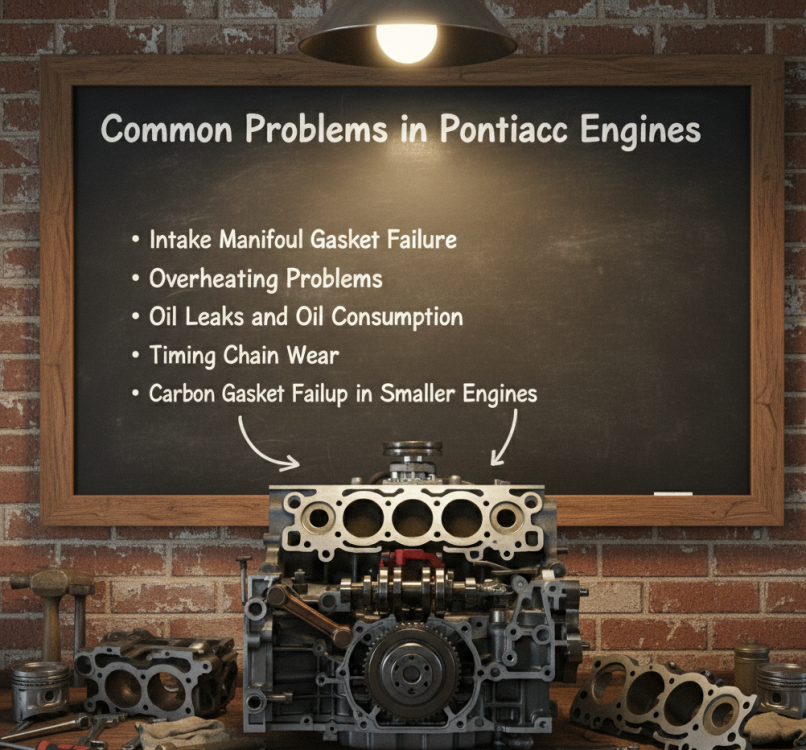
1. Intake Manifold Gasket Failure
One of the most widely reported issues in pontiac engines, especially those equipped with the 3.1L and 3.4L V6 powertrains, is intake manifold gasket failure. Over time, the original gasket materials—often made with plastic or composite components—can degrade due to heat cycles and coolant exposure.
Why It Happens:
-
Repeated heating and cooling cycles
-
Coolant corrosion

-
Plastic gasket material breakdown
-
High mileage wear
Warning Signs:
-
Coolant leaks around the engine
-
Overheating
-
Milky residue under oil cap

-
Rough idle or misfire
If left unaddressed, coolant may mix with engine oil, causing internal damage to bearings and other components.
2. Overheating Problems
Overheating is another common concern in aging pontiac engines. This issue often stems from cooling system neglect or component failure rather than a fundamental engine design flaw.
Common Causes:
-
Faulty thermostat
-
Failing water pump
-
Radiator blockage
-
Low coolant levels
-
Cooling fan malfunction
Overheating can lead to warped cylinder heads, blown head gaskets, and permanent internal engine damage if not corrected quickly.
3. Oil Leaks and Oil Consumption
Many owners report oil leaks as vehicles age. Valve cover gaskets, oil pan gaskets, and rear main seals can deteriorate over time.
Why Oil Leaks Occur:
-
Rubber gasket aging
-
High engine temperatures
-
Increased crankcase pressure
-
Poor maintenance intervals
Ignoring oil leaks can cause low oil levels, leading to premature wear in pontiac engines.
4. Timing Chain Wear
Unlike timing belts that require scheduled replacement, timing chains are designed to last longer. However, high-mileage engines may experience timing chain stretch or guide wear.
Symptoms:
-
Rattling noise at startup
-
Decreased performance
-
Check engine light
-
Poor fuel efficiency
If the timing chain slips or breaks, it can cause serious valve damage.
5. Head Gasket Failure
Though less common than intake gasket issues, head gasket failure can still occur in high-mileage engines.
Warning Signs:
-
Persistent overheating
-
White smoke from exhaust
-
Coolant loss without visible leaks
-
Loss of compression
When overheating combines with gasket failure, repair costs increase significantly.
6. Carbon Buildup in Smaller Engines
Compact models using engines such as Pontiac G3 Engines may develop carbon buildup over time, particularly with city driving and short trips.
Effects:
-
Rough idle
-
Hesitation
-
Reduced fuel economy
-
Decreased power
While not catastrophic, carbon buildup can reduce overall efficiency if neglected.
Solutions to Pontiac Engine Problems
Solution 1: Upgrade Intake Manifold Gaskets
Replacing factory gaskets with updated metal-reinforced designs greatly improves durability. During repair:
-
Flush the cooling system
-
Inspect for coolant contamination
-
Replace related seals and components
This solution significantly reduces repeat failures in pontiac engines.
Solution 2: Maintain the Cooling System Regularly
Prevent overheating by:
-
Replacing coolant every 2–3 years
-
Inspecting hoses and clamps
-
Monitoring thermostat performance
-
Checking radiator airflow
Routine cooling system maintenance extends engine life and prevents warped components.
Solution 3: Repair Oil Leaks Immediately
When oil leaks appear:
-
Replace worn valve cover gaskets
-
Inspect PCV system
-
Avoid delaying oil top-offs
-
Follow proper oil change intervals
Keeping oil levels stable protects internal components of pontiac engines from excessive wear.
Solution 4: Inspect Timing Components at High Mileage
If startup rattling occurs:
-
Inspect timing chain and guides
-
Replace worn tensioners
-
Address check engine codes quickly
Proactive replacement prevents severe internal damage.
Solution 5: Address Carbon Buildup
For carbon accumulation:
-
Use quality fuel
-
Perform periodic high-speed driving to clear deposits
-
Consider professional intake cleaning if necessary
Regular maintenance helps compact engines, including Pontiac G3 Engines, operate smoothly for years.
Solution 6: Evaluate Replacement for Severe Damage
When engines suffer catastrophic overheating, cracked heads, or spun bearings, rebuilding may not always be the most cost-effective option. In such cases, many owners consider installing quality-tested used engines.
Properly inspected used engines can restore performance at a lower cost than buying a brand-new engine. They provide a practical balance between affordability and reliability, especially for older vehicles.
Before purchasing used engines, it is important to verify mileage, compression results, and warranty coverage. Selecting a reputable supplier ensures better long-term performance and peace of mind.
Cost Comparison Overview
Repair costs vary depending on location and labor rates, but general estimates include:
-
Intake manifold gasket replacement: $800–$1,500
-
Head gasket replacement: $1,500–$2,500
-
Timing chain service: $1,000–$2,000
-
Engine rebuild: $3,000–$5,000
-
Replacement with used engines: $2,000–$4,000 installed
Because of the significant price difference, many owners find used engines to be a financially practical solution when facing major mechanical failure.
Preventative Maintenance Tips
Long-term reliability depends on consistent care. To maximize the lifespan of pontiac engines, follow these best practices:
-
Change oil every 3,000–5,000 miles
-
Monitor coolant levels monthly
-
Inspect belts and hoses regularly
-
Avoid aggressive driving when engine is cold
-
Fix minor leaks before they escalate
-
Follow manufacturer-recommended service schedules
Vehicles that receive routine maintenance often exceed 200,000 miles without major issues.
Frequently Asked Questions (FAQ)
1. Are Pontiac engines reliable?
Yes. With proper maintenance, many pontiac engines provide dependable performance for well over 150,000–200,000 miles.
2. What is the most common Pontiac engine problem?
Intake manifold gasket failure is among the most frequently reported issues, especially in certain V6 models.
3. How can I prevent overheating?
Maintain the cooling system, replace coolant regularly, and inspect thermostats and water pumps.
4. When should I consider engine replacement?
If the engine experiences severe overheating, internal bearing failure, or cracked components, replacement may be more cost-effective than rebuilding.
5. Do compact Pontiac engines last as long as larger ones?
Yes, when properly maintained. Engines such as Pontiac G3 Engines can deliver reliable performance with consistent servicing.
Final Thoughts
Pontiac vehicles carry a strong legacy of performance and practicality. While some common issues—such as intake manifold gasket failure, overheating, oil leaks, and timing chain wear—have appeared in aging pontiac engines, most of these problems are manageable with timely maintenance and early intervention.
The key to longevity lies in preventative care. Regular oil changes, cooling system inspections, and prompt repairs significantly reduce the risk of catastrophic engine failure. When severe damage does occur, evaluating cost-effective options such as quality-tested used engines can extend the life of your vehicle without exceeding its value.
With informed ownership and proactive maintenance, Pontiac engines can remain reliable, efficient, and road-ready for many years to come.





