

Business Finance: Practical Funding Options for Growing and Managing Businesses
Business Finance plays a critical role in how companies operate, expand, and handle everyday cash flow challenges. Whether a business is a startup, a growing company, or an established enterprise, access to the right type of funding can determine how smoothly it manages expenses, invests in growth, and responds to unexpected financial pressure.
Today, business owners have more financing options than ever before. From invoice-based solutions to long-term property funding, understanding each option helps decision-makers choose finance that aligns with their real business needs rather than short-term convenience.
Understanding Business Finance and Its Purpose
At its core, Business Finance refers to the funding solutions that help businesses manage working capital, purchase assets, pay taxes, acquire other businesses, or fund development projects. Unlike personal finance, business funding must be structured around revenue cycles, operational costs, and long-term strategy.
Companies often turn to specialists like thebestgroup to navigate these options and understand which finance solutions fit their specific situation without overextending risk.
Invoice-Based Finance Solutions
For businesses that issue invoices and wait weeks or months for payment, invoice-based funding can help stabilize cash flow.
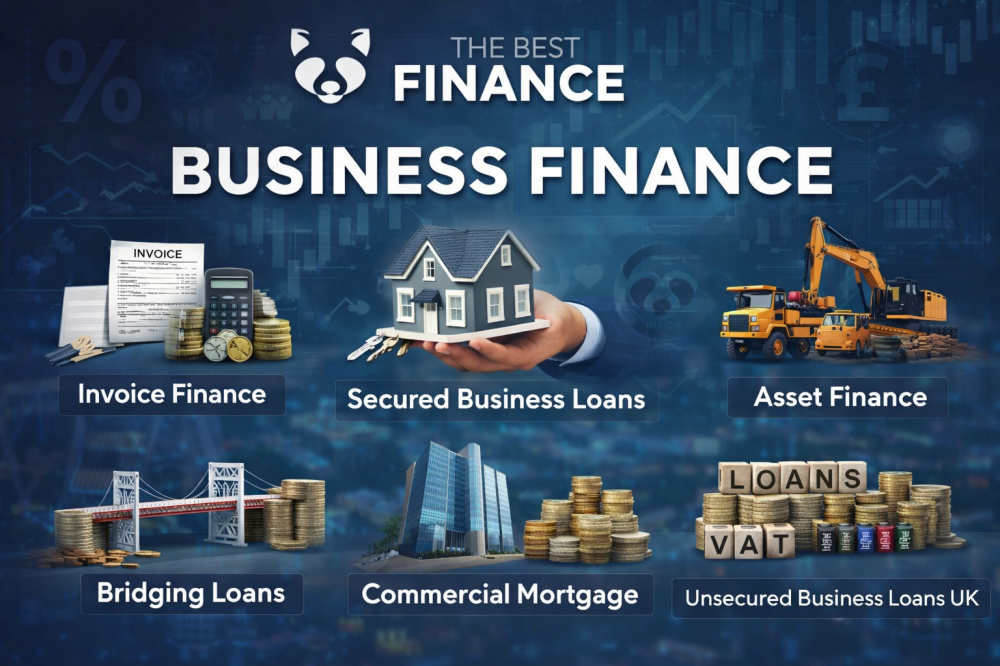
Invoice Finance allows businesses to access funds tied up in unpaid invoices. Rather than waiting for customers to pay, companies receive a percentage of the invoice value upfront.
Invoice Discounting is commonly used by businesses that prefer to retain control of their sales ledger. Payments from customers go directly to the business, and the facility operates quietly in the background.
Invoice Factoring, on the other hand, involves a third party managing collections. This can be helpful for businesses that want to reduce administrative workload.

For short-term or one-off needs, Single Invoice Finance enables funding against a specific invoice instead of an ongoing facility, making it flexible for project-based businesses.
Revolving and Short-Term Credit Options
Some businesses need ongoing access to funds rather than a one-time loan.
A revolving facility credit allows companies to borrow, repay, and re-borrow funds within an agreed limit. This structure is often useful for managing seasonal fluctuations or unexpected expenses.
For businesses seeking faster access to capital without offering assets as collateral, unsecured business loans UK are commonly used, particularly by small and medium-sized enterprises with strong trading history.
Secured and Asset-Backed Funding
When larger sums are required, secured finance often provides better terms.
Secured Business Loans use assets such as property, machinery, or equipment as collateral. These loans are commonly used for expansion, refinancing, or large purchases.
Asset Finance allows businesses to acquire vehicles, equipment, or machinery while spreading the cost over time. The asset itself typically serves as security, making this option accessible even when cash reserves are limited.
Managing Tax Obligations with Business Finance
Unexpected tax bills can strain even profitable businesses.
A corporation tax loan helps companies spread their tax liability into manageable payments rather than paying a large sum upfront.
Similarly, VAT loans are designed to assist businesses in meeting VAT obligations on time while maintaining cash flow for operations and payroll.
Property and Development Funding
Property-backed finance plays a major role in long-term business planning.
Commercial Mortgages are used to purchase or refinance business premises such as offices, warehouses, or retail spaces. These mortgages typically offer longer repayment terms aligned with business stability.
For construction and property projects, Development Finance supports the cost of building or refurbishing commercial or residential properties. This funding is usually released in stages as the project progresses.
Bridging Loans serve as short-term funding solutions, often used to bridge gaps between property transactions or secure time-sensitive opportunities.
Supply Chain and Trade Solutions
Businesses involved in manufacturing, wholesale, or international trade often rely on specialized finance tools.
Supplier Finance enables businesses to pay suppliers promptly while extending their own payment terms, helping maintain strong supplier relationships.
Trade Finance supports international transactions by covering risks related to importing, exporting, and currency exposure. This form of Business Finance is essential for companies operating across borders.
Growth and Expansion Finance
Expansion often requires tailored funding strategies.
Business Acquisition Finance helps companies acquire competitors, suppliers, or complementary businesses. This type of funding is structured around the projected value and performance of the acquired company.
For retail and service-based businesses, Merchant Cash Advance provides funding based on future card sales. Repayments fluctuate with revenue, making it adaptable to sales performance.
Choosing the Right Business Finance Solution
No single finance option suits every business. The right solution depends on cash flow patterns, industry, growth stage, and risk tolerance. Working with experienced advisors like thebestgroup can help businesses evaluate realistic options without unnecessary complexity.
Understanding how each finance product works allows business owners to make informed decisions that support sustainability rather than short-term fixes.
Frequently Asked Questions (FAQs)
What is Business Finance and why is it important?
Business Finance refers to funding solutions that help companies manage cash flow, pay expenses, invest in growth, and handle financial obligations. It is important because it provides stability and flexibility in daily operations.
What is the difference between Invoice Discounting and Invoice Factoring?
Invoice Discounting allows businesses to manage customer payments themselves, while Invoice Factoring involves a third party handling collections.
Are unsecured business loans UK suitable for all businesses?
Unsecured business loans UK are suitable for businesses with strong trading history and credit profiles, but may carry higher interest rates compared to secured options.
When should a business consider Asset Finance?
Asset Finance is ideal when purchasing equipment or vehicles without using large amounts of cash upfront.
How can VAT loans help a business?
VAT loans allow businesses to spread VAT payments over time, helping maintain cash flow and avoid late payment penalties.
Is Development Finance only for large projects?
Development Finance can support both small and large property projects, provided the project is commercially viable.
Conclusion
Business Finance is not just about borrowing money—it is about choosing structured financial tools that align with how a business operates and grows. By understanding options such as invoice discounting, secured business loans, trade finance, and asset-based funding, businesses can make practical decisions that support long-term success. With guidance from experienced providers like thebestgroup, companies can approach financing with clarity and confidence rather than uncertainty.





