

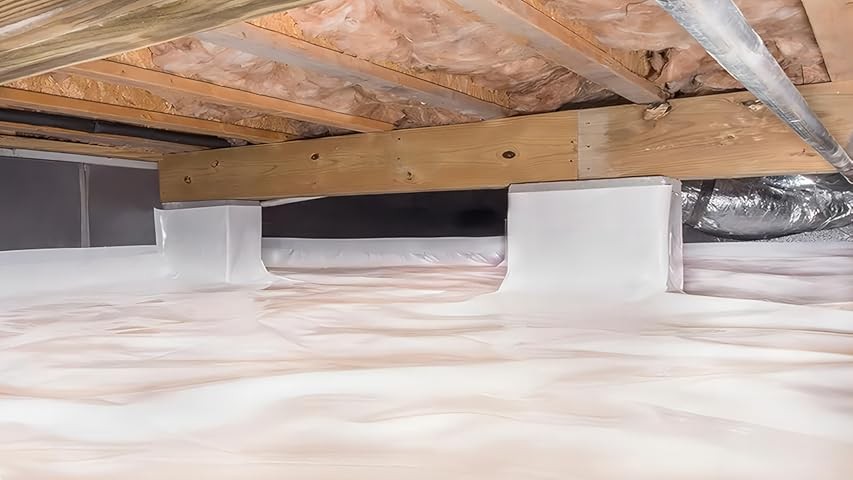
Crawlspace encapsulation in Glen Burnie improves energy efficiency by sealing out moisture, outside air, and temperature swings. In Glen Burnie homes, it helps stabilize indoor comfort, reduce HVAC strain, and protect the structure year-round.
Quick answers that matter
- Encapsulation blocks moisture and air leaks under the home
- It lowers heating and cooling loss tied to crawlspaces
- It supports healthier indoor air and long-term durability
Why Crawlspaces Matter for Energy Efficiency
Crawlspaces are often overlooked, but they directly affect how hard your home works to stay comfortable. In Maryland’s mixed-humid climate, open or vented crawlspaces let damp air and outdoor temperatures push into the house.

That air moves upward. It impacts floors, walls, and indoor air quality.
According to guidance from the U.S. Department of Energy, poorly insulated crawlspaces can account for significant heat loss and moisture problems when left vented or unsealed.
How Air Moves From the Crawlspace
Warm air rises. When outside air enters the crawlspace, it pulls conditioned air down from the living space. This cycle increases energy use and creates cold floors in winter.

Common Crawlspace Problems in Glen Burnie Homes
Homes in Anne Arundel County often deal with moisture-heavy soil and seasonal humidity. These conditions make crawlspaces a weak point.
Excess Moisture and Humidity
High humidity leads to damp insulation, condensation, and mold risk. Moist air also carries musty odors into the home.

The U.S. Environmental Protection Agency notes that controlling moisture is key to preventing mold growth, especially in enclosed spaces like crawlspaces.
Cold Floors and Drafts
Unsealed crawlspaces allow cold air to sit under the floor system. This causes heat loss and uneven indoor temperatures.
Encapsulation separates the crawlspace from outdoor conditions.
What Crawlspace Encapsulation Includes
Encapsulation is a system, not a single product. Each layer serves a purpose.
Vapor Barrier Installation
A heavy-duty vapor barrier covers the crawlspace floor and walls. It blocks ground moisture from entering the space.
This layer is sealed at seams and edges for full coverage.
Air Sealing and Insulation
Spray foam insulation is used on rim joists and foundation walls. It stops air leakage and provides thermal resistance in one step.
Research from the Building Science Corporation explains that sealed and insulated crawlspaces perform better than vented designs in humid climates.
Energy Efficiency Gains You Can Expect
Encapsulation delivers practical, measurable benefits for homeowners.
Reduced Heating and Cooling Loss
By sealing air leaks, the HVAC system no longer fights outdoor air entering from below. This improves efficiency and comfort.
Homeowners often notice:
- More stable indoor temperatures
- Shorter HVAC run times
- Less temperature difference between floors
Improved Indoor Air Quality
Encapsulation limits moisture, mold spores, and soil gases from entering the home. Clean, dry air stays inside longer.
Analysis: Encapsulated vs Vented Crawlspaces
Below is a comparison of performance differences.
|
Feature |
Vented Crawlspace |
Encapsulated Crawlspace |
|---|---|---|
|
Moisture Control |
Poor |
Strong |
|
Energy Efficiency |
Low |
High |
|
Indoor Air Quality |
Inconsistent |
More stable |
|
Insulation Durability |
Degrades |
Long-lasting |
Encapsulation consistently outperforms vented designs in mixed-humid regions like Glen Burnie.
Cost and Practical Considerations
Encapsulation is an investment, but it addresses multiple issues at once.

Is Encapsulation Worth the Cost?
For many homeowners, the value comes from combined benefits:
- Lower energy bills over time
- Fewer moisture-related repairs
- Better comfort and air quality
Why Professional Installation Matters
Improper sealing can trap moisture or create ventilation issues. Experienced installers design systems based on local climate and building conditions.
Conclusion
Crawlspace encapsulation supports energy efficiency by stopping moisture, sealing air leaks, and stabilizing indoor temperatures. In Glen Burnie homes, it helps reduce energy waste and protects the structure long term.
For expert crawlspace and spray foam solutions, contact Peninsula Insulation. Email: wil@mdsprayfoam.net Phone: (410) 770-2624
Frequently Asked Questions
How Do I Know If My Crawlspace Needs Encapsulation?
Signs include musty odors, cold floors, high humidity, and rising energy bills.
Does Encapsulation Replace Crawlspace Insulation?
It often improves or replaces older insulation by moving insulation to foundation walls.
Will Encapsulation Help in Summer?
Yes. It limits humid air entry and reduces cooling load.
Is Spray Foam Safe in Crawlspaces?
Yes, when installed correctly by trained professionals.
How Long Does Crawlspace Encapsulation Last?
Quality systems can last decades with minimal maintenance.
Does Encapsulation Help With Mold?
It reduces the conditions that allow mold to grow by controlling moisture.
Author: Wil Perkins is the founder of Peninsula Insulation and a long-time resident of Easton, Maryland. With nearly five years in the insulation business, Wil leads a team known for professional service and quality work.
Reviewer: Emily Martinez has 12 years of experience in spray foam insulation. She reviewed this article and suggested ways to make the content more useful for contractors looking to grow their customer base.





