
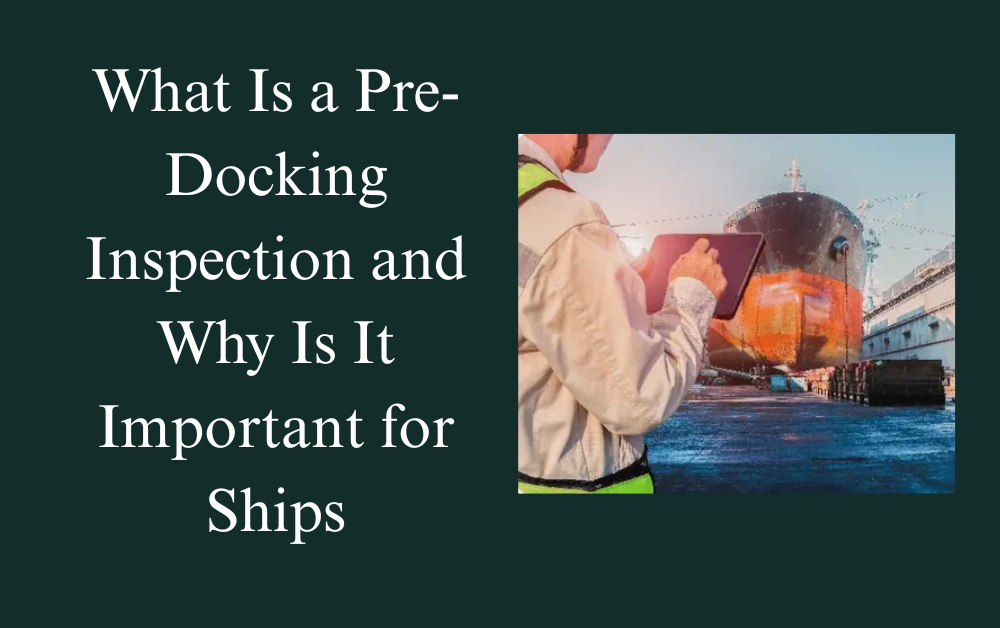
Ships need regular checks and repairs to stay safe and perform well. One important step in keeping ships in good condition is the pre-docking inspection. This inspection helps ship owners and managers know what needs fixing before the ship goes into the dry dock. Dry docking is when a ship is taken out of the water for maintenance or repairs.
In this blog, we will explain what a pre-docking inspection is, what it includes, and why it is very important for ships. Whether you are new to the shipping industry or someone who manages vessels, this guide will help you understand this process in a simple way.
Note : Looking for reliable Pre-docking Inspection Services?Let us help you get your vessel ready with a detailed inspection and smart planning. Contact us today to schedule your Pre-docking Inspection Services and avoid costly surprises during dry dock.
What Does Pre-Docking Inspection Mean?
A simple check before going to dry dock
A pre-docking inspection is a complete check of a ship before it enters dry dock. It is done to find out if there are any issues or damage on the ship. The goal is to plan what work needs to be done during dry docking.
This inspection is done by experienced surveyors or engineers who go through the ship step by step. They look at all the important parts like the hull (outer body of the ship), propeller, rudder, engines, and safety systems.
Why Is a Pre-Docking Inspection Done?
To save time and money
Dry docking is expensive. Every day a ship spends in dry dock costs money. If repairs are not planned properly, the ship may stay in the dock longer than expected. This can lead to extra costs.
A pre-docking inspection helps find the problems early. It gives time to arrange parts, tools, and manpower before the ship enters dry dock. This helps in finishing the work faster and saves both time and money.
To plan better for dry docking
With the help of the inspection report, ship managers can make a list of repairs needed. They can also make a timeline to do each task during dry dock. This helps avoid surprises and delays.
To keep the ship safe
Safety is a big reason for doing a pre-docking inspection. It helps in finding any faults that may affect the ship’s safety. This includes checking the engine, steering system, hull cracks, or rust. Fixing these issues on time keeps the ship safe to sail.
What Is Checked During a Pre-Docking Inspection?
During the inspection, many parts of the ship are checked. Below are the major areas that are usually covered.
Hull and underwater parts
- Hull plating: Checking for cracks, dents, rust, or damage.
- Propeller and shaft: Looking for wear, cracks, or loose parts.
- Rudder: Making sure it moves properly and there are no signs of damage.
- Sea valves and sea chest: Checking for rust or blockage in the water intake systems.
Engine and machinery
- Main engine and generators: Checking for leaks, noise, or oil problems.
- Cooling systems: Making sure water flows properly to cool the engine.
- Fuel systems: Looking for leaks, rust, or dirty filters.
- Lubrication systems: Making sure the oil is clean and flowing well.
Deck and safety equipment
- Anchors and chains: Checking if they are strong and not worn out.
- Lifeboats and life rafts: Making sure they are ready to use in an emergency.
- Fire-fighting equipment: Checking hoses, pumps, and extinguishers.
- Navigation lights and systems: Making sure all lights and tools are working.
Inside the ship
- Tanks and cargo holds: Checking for leaks, rust, or bad smells.
- Ballast systems: Making sure the water balance system is working.
- Accommodation areas: Looking for any damage, water leaks, or electrical problems.
When Should a Pre-Docking Inspection Be Done?
Timing matters
It is best to do the pre-docking inspection at least one to three months before the dry docking is planned. This gives enough time to:
- Review the inspection report
- Get repair materials and spare parts
- Hire any special service providers needed
- Plan the work schedule during dry dock
If the inspection is done too late, there may not be enough time to prepare. This can delay the dry dock work or increase the cost.
Who Performs the Pre-Docking Inspection?
Trusted marine professionals
Pre-docking inspections are usually carried out by marine engineers, ship surveyors, or shipyard inspectors. Some companies also have third-party inspection services that specialize in this work.
These professionals know what to look for and how to judge the condition of each part of the ship. They also provide a detailed report with pictures, notes, and suggestions for repairs.
What Is Included in a Pre-Docking Inspection Report?
Clear details for easy planning
The report includes the following:
- List of problems found
- Condition of major ship parts
- Photos of any damage
- Urgent repairs needed
- Suggested spare parts
- Estimated time for each repair
- Cost estimates for repair work
This report helps the shipowner and shipyard plan the work without confusion.
What Are the Main Benefits of Pre-Docking Inspection?
Let’s take a look at the main advantages of getting a pre-docking inspection done:
1. Better planning and less time in dry dock
When everything is known in advance, the repair work in dry dock can be done quickly. There is less chance of delays because materials and workers are ready.
2. Cost savings
If you know what needs fixing, you can avoid wasting money on unplanned work or buying the wrong parts. A well-planned dry dock project saves a lot of money.
3. Improved safety
The inspection helps find safety issues early. These can be fixed before they become bigger problems. This makes the ship safer for the crew and cargo.
4. Longer life of the ship
Regular inspections and repairs help the ship stay in good condition for many years. This increases the life of the vessel and its value.
Common Problems Found During Pre-Docking Inspections
Here are some common issues that inspectors find during these checks:
- Hull damage or rust patches
- Loose or broken propeller parts
- Worn-out engine seals or oil leaks
- Cracks in rudder or shaft area
- Corroded pipes or valves
- Old safety equipment or expired fire extinguishers
- Faulty lights or alarms
Finding and fixing these before the dry dock helps prevent bigger problems.
What Happens After the Pre-Docking Inspection?
Once the inspection is finished, the report is reviewed by the ship manager and technical team. Based on the report:
- A dry dock work plan is created
- Spare parts are ordered
- Shipyard services are booked
- Any class survey or government inspection is planned if needed
This ensures that everything is ready before the ship enters dry dock.
What Is the Difference Between Pre-Docking and Dry Dock Inspection?
Many people get confused between pre-docking and dry dock inspections. Here’s the simple difference:
Pre-Docking Inspection:
- Done before the ship enters dry dock
- Helps in planning and preparing for repairs
- Done while the ship is still in operation or floating
Dry Dock Inspection:
- Done during dry docking
- Confirms the ship's condition and starts repair work
- Allows checking of parts not visible when the ship is in water
Both inspections are important but happen at different times.
Final Thoughts: Why Should You Not Skip Pre-Docking Inspection?
Skipping a pre-docking inspection can lead to many problems like delays, high costs, or missed safety issues. It is always better to be prepared before dry docking begins.
Pre-docking inspections are a smart way to save money, ensure safety, and make sure your ship stays in top condition. If you own or manage a ship, never underestimate the power of early planning.
For more insightful articles related to this topic, feel free to visit : murfreesborovoice