
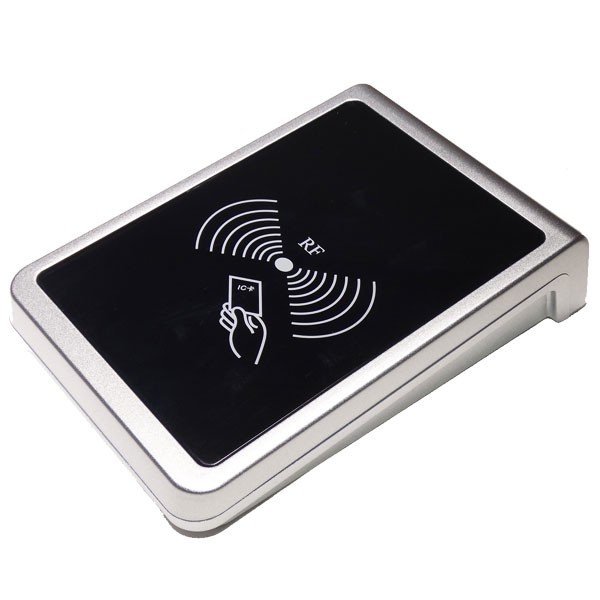
In today’s fast-moving business environment, companies need accurate and efficient ways to track products, inventory, and assets. RFID readers have become one of the most reliable technologies for improving visibility and automation across industries. From retail stores and warehouses to healthcare facilities and logistics companies, RFID systems help businesses save time, reduce errors, and improve operational efficiency.
What Are RFID Readers?
RFID readers are electronic devices used to communicate with RFID tags through radio frequency signals. These readers collect data stored on RFID tags without requiring direct contact or line-of-sight scanning. Unlike traditional barcode scanners, RFID readers can scan multiple tags at the same time, making them highly efficient for inventory and asset management.
An RFID system generally consists of three components:
- RFID tags
- RFID readers
- Software or database system
The reader sends radio signals to nearby RFID tags, which respond with stored information. This data is then processed and used for tracking, identification, or monitoring purposes.
How RFID Readers Work
RFID readers use antennas to transmit radio waves. When an RFID tag enters the reader’s range, the tag receives energy from the signal and sends back its stored data. The reader captures this information and transfers it to a connected computer system or cloud platform.
RFID readers can work with different types of tags, including:
- Passive RFID tags
- Active RFID tags
- Semi-passive RFID tags
Passive tags are the most common because they are affordable and require no internal battery. Active tags, on the other hand, include a battery and offer longer read ranges.
Types of RFID Readers
Different industries use different RFID readers depending on their operational needs. Here are the most common types:
Fixed RFID Readers
Fixed readers are installed at specific locations such as warehouse entrances, production lines, or retail checkout points. These readers continuously monitor RFID-tagged items passing through designated areas.
Benefits include:
- Automated scanning
- Faster inventory tracking
- Reduced manual labor
- Improved accuracy
Handheld RFID Readers
Handheld readers are portable devices used for mobile scanning tasks. Employees can carry them around warehouses, stores, or hospitals to scan items quickly and efficiently.
Advantages include:
- Easy mobility
- Fast inventory checks
- Real-time data updates
- User-friendly operation
Integrated RFID Readers
Integrated readers combine the antenna and reader into a single device. These compact systems are ideal for businesses looking for simple installation and lower maintenance.
USB RFID Readers
USB RFID readers are commonly used for desktop applications and access control systems. They connect directly to computers and are suitable for smaller operations.
Benefits of RFID Readers
RFID technology provides several advantages compared to traditional tracking systems.
Improved Inventory Accuracy
RFID readers reduce human error by automating the scanning process. Businesses can monitor inventory levels more accurately and avoid stock discrepancies.
Faster Operations
Unlike barcode systems that require one-by-one scanning, RFID readers can scan multiple tags simultaneously. This significantly improves operational speed.
Better Asset Tracking
Companies can track valuable assets in real time, reducing losses and improving accountability.
Enhanced Security
RFID readers help monitor unauthorized movement of products or equipment. Many businesses use RFID systems for access control and anti-theft protection.
Reduced Labor Costs
Automation reduces the need for manual inventory counting and repetitive tasks, saving time and labor expenses.
Industries Using RFID Readers
RFID readers are widely used across many industries because of their flexibility and efficiency.
Retail Industry
Retail businesses use RFID readers for:
- Inventory management
- Theft prevention
- Supply chain visibility
- Faster checkout systems
Retailers can maintain accurate stock levels and improve customer satisfaction.
Warehouse and Logistics
Warehouses rely on RFID readers to track shipments, pallets, and inventory in real time. Logistics companies use RFID systems to improve shipping accuracy and reduce delays.
Healthcare Sector
Hospitals use RFID readers to monitor medical equipment, medications, and patient information. This helps improve patient safety and operational efficiency.
Manufacturing Industry
Manufacturers use RFID technology for production tracking, quality control, and equipment monitoring.
Transportation and Toll Systems
RFID readers are commonly used in toll collection systems, parking management, and public transportation ticketing.
Choosing the Right RFID Reader
Selecting the right RFID reader depends on your business requirements. Here are some factors to consider:
Read Range
Different readers offer different scanning distances. Long-range readers are ideal for warehouses and logistics operations, while short-range readers work well for access control systems.
Frequency Compatibility
RFID readers operate on different frequencies, including:
- Low Frequency (LF)
- High Frequency (HF)
- Ultra-High Frequency (UHF)
UHF readers are commonly used for inventory tracking because they support longer read ranges.
Environment
Businesses operating in harsh environments should choose durable RFID readers designed for industrial conditions.
Connectivity Options
Modern RFID readers support Wi-Fi, Bluetooth, Ethernet, and USB connectivity for easy integration with existing systems.
Future of RFID Readers
RFID technology continues to evolve with advancements in automation and the Internet of Things (IoT). Modern RFID readers now offer cloud integration, real-time analytics, and AI-powered tracking solutions.
Businesses are increasingly adopting RFID systems to improve visibility, reduce operational costs, and enhance decision-making. As technology becomes more affordable, RFID readers are expected to become even more common across industries.
Conclusion
RFID readers have transformed the way businesses manage inventory, assets, and operations. Their ability to provide fast, accurate, and automated tracking makes them an essential tool for modern industries. Whether used in retail, healthcare, logistics, or manufacturing, RFID readers help businesses improve efficiency, reduce errors, and gain better control over their operations.