
Introduction
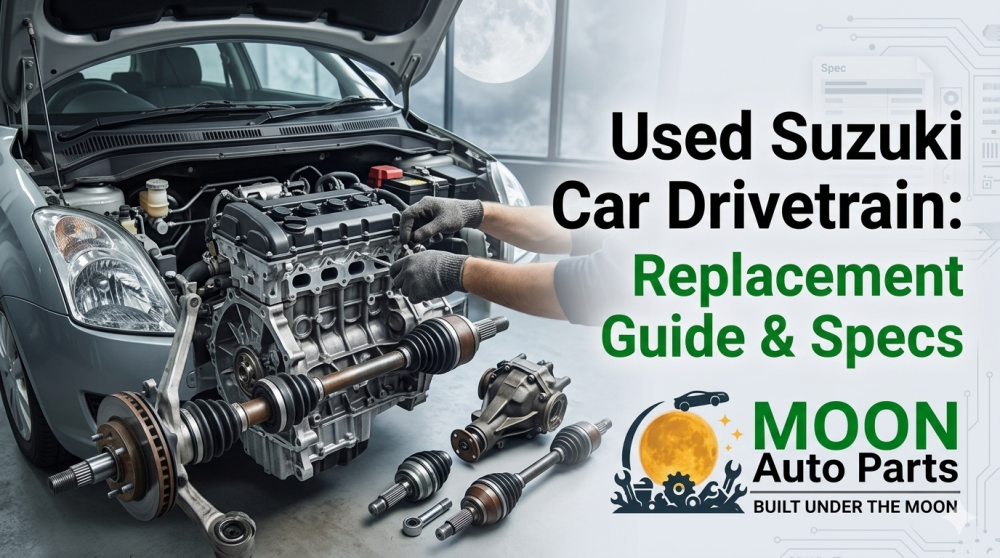
When your Suzuki begins showing signs of mechanical wear grinding gears, vibration under load, or complete power loss to the wheels the drivetrain is often the culprit. For Suzuki owners looking to restore performance without the cost of a brand-new assembly, sourcing a used Suzuki car drivetrain is one of the smartest and most cost-effective decisions you can make.
This guide walks you through everything you need to know: what types of drivetrains Suzuki models use, how to assess compatibility, what to expect from a replacement, and how remanufactured alternatives stack up against used units.
Understanding Suzuki Drivetrain Configurations
Suzuki has produced vehicles across a diverse range of configurations over the decades. Depending on the model year and trim level, you may be dealing with one of the following:
Front-Wheel Drive (FWD): Common in the Suzuki Swift, Baleno, and Cultus. These systems route engine power directly to the front axle via a transaxle.
Rear-Wheel Drive (RWD): Found in older Suzuki Samurai and Jimny models. Power travels from the gearbox to a rear differential via a driveshaft.
All-Wheel Drive / 4WD: Present in the Suzuki Vitara, Grand Vitara, and Jimny. These systems distribute torque to all four wheels and include transfer cases for off-road capability.
Understanding which configuration your vehicle uses is the first step toward finding the correct used drivetrain replacement. Always verify by checking the VIN decoder or the original build sheet.
Types of Replacement Options
When shopping for a used Suzuki car drivetrain, follow the suzuki replacemnt engine guide and also you generally have three options:
Used / Pull-Out Drivetrains: Sourced directly from salvage yards or dismantled vehicles. These are the most affordable option — often 60–80% cheaper than OEM new parts — but come with unknown mileage history and no warranty unless specifically stated.
Remanufactured Drivetrains: These units are disassembled, inspected, and rebuilt to factory specifications using new or refurbished internals. They cost more than used units but offer a reliability guarantee, often backed by a 4 years 40k miles warranty.
Rebuilt / Reconditioned Units: A middle ground — components are inspected, worn parts replaced, and the assembly tested. Quality varies by vendor.
Cost Breakdown
The cost of a used Suzuki drivetrain varies significantly based on model, year, and drivetrain type:
Suzuki Swift FWD Transaxle (used): $250 – $600 Suzuki Grand Vitara 4WD Transfer Case (used): $400 – $900 Suzuki Jimny Rear Axle Assembly (used): $300 – $700 Remanufactured Vitara drivetrain: $900 – $1,800
Labor costs for drivetrain replacement typically range from $400 to $1,200 depending on complexity and shop rates. A 4WD system naturally requires more time to remove and install versus a simple FWD transaxle swap.
Compatibility Specifications to Verify
Before purchasing a used Suzuki car drivetrain, confirm the following specifications match your vehicle:
Engine code and displacement (e.g., G16B, J20A, M16A). Transmission type (manual vs. automatic) and number of speeds. Model year range — Suzuki often updated gear ratios or axle spline counts mid-generation. 4WD vs. 2WD variant. Final drive ratio to ensure it matches your existing differentials.
Mismatch in any of these areas can result in drivetrain binding, incorrect speedometer readings, or complete incompatibility.
Tips for a Successful Replacement
Always request a compression test or short test drive record if buying locally. Request mileage documentation when available. Replace seals, bearings, and fluid during installation even on a used unit the labor is already being done. Use OEM-specification gear oil (typically GL-4 75W-90 for most Suzuki manuals). Have the unit inspected by a certified mechanic before installation if you're unsure.
Final Thoughts
A used Suzuki car drivetrain is a reliable, budget-friendly solution for most owners facing mechanical failure. By verifying compatibility specifications, understanding cost ranges, and choosing between used or remanufactured options based on your priorities, you can restore your Suzuki to full operational condition without breaking the bank.
Frequently Asked Questions (FAQ)
Q1: How long does a used Suzuki drivetrain typically last?
With proper installation and regular fluid maintenance, a quality used Suzuki drivetrain can last 80,000 to 150,000 additional kilometres, depending on the model and driving conditions.
Q2: Can I swap a 2WD drivetrain into a 4WD Suzuki?
No — 4WD and 2WD Suzuki models have fundamentally different chassis and subframe mounting points. This swap is not practical or cost-effective.
Q3: What fluid should I use after installing a used Suzuki drivetrain?
Most Suzuki manual drivetrains require GL-4 75W-90 gear oil. Always consult your specific model's service manual as automatic transaxles use different ATF fluid.
Q4: Is a remanufactured drivetrain better than a used one?
Remanufactured units offer greater reliability and warranty coverage, making them ideal if your vehicle has many years of life left. Used units are best for older models where long-term investment may not be justified.
Read more - What Are Specs Of The Honda CR-V Engines?