
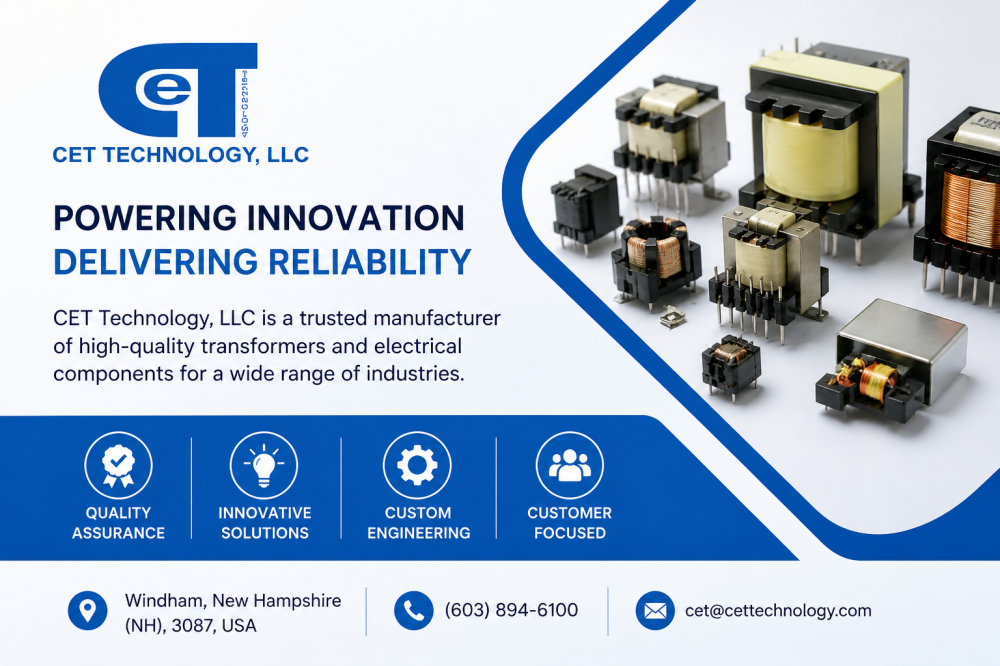
Electrical Components Manufacturing Companies have a lot to contribute in the ever-changing field of electronics manufacturing business. In particular, there are many types of components used in electronics, including the flyback transformer which is an important part of electronics manufacturing.
The purpose of this article is to examine the basic concepts, working principles, uses, and significance of flyback transformers in the modern manufacturing process.
What Is a Flyback Transformer?
A flyback transformer is a specialized type of transformer used primarily in switch-mode power supplies (SMPS). Unlike conventional transformers, it performs a dual function:
- Acts as both a transformer and an energy storage inductor
- Provides voltage conversion and electrical isolation
It is widely used in applications requiring low-to-medium power conversion, typically under 200 watts.
How Does a Flyback Transformer Work?
The operation of a flyback transformer is based on energy storage and release cycles:
Step-by-Step Working Principle
- Energy Storage Phase (Switch ON)
- Electrical energy is stored in the magnetic core.
- No energy is transferred to the output at this stage.
- Energy Transfer Phase (Switch OFF)
- The stored energy is released to the secondary winding.
- Voltage is generated and delivered to the load.
This “store-and-release” mechanism makes flyback transformers highly efficient for compact circuits.
Key Features of Flyback Transformers
Electrical components manufacturing companies rely on flyback transformers due to their unique advantages:
- Compact design with fewer components
- High voltage generation capability
- Electrical isolation between input and output
- Cost-effective for low-power applications
- Multiple output voltage capability
These features make them ideal for modern electronics where space, efficiency, and safety are critical.
Applications Across Industries
Flyback transformers are used in a wide range of industries:
H3: Consumer Electronics
- LED TVs and displays
- Mobile chargers and adapters
- Gaming consoles
Industrial Systems
- Automation equipment
- Control systems
- Embedded power supplies
Automotive Sector
- Electric vehicle auxiliary power systems
- Battery management systems
Renewable Energy
- Solar inverters
- Power conversion units
They are particularly popular in SMPS designs, where efficiency and compactness are essential.
Why Flyback Transformers Matter in Electrical Components Manufacturing
For any Electrical Components Manufacturing Company, flyback transformers are not just components—they are design enablers.
- Simplified Circuit Design
Flyback topology reduces the need for additional inductors, simplifying the overall circuit.
- Cost Efficiency
Fewer components mean lower manufacturing costs and faster production cycles.
- Flexibility in Voltage Output
They support multiple output voltages, making them versatile across applications.
- Improved Safety
Electrical isolation helps protect both devices and users from voltage spikes.
Design Considerations in Manufacturing
When designing or sourcing flyback transformers, manufacturers consider:
- Core material and air gap design
- Winding configuration
- Switching frequency
- Thermal performance
- Efficiency under varying loads
Proper design ensures reliability, compliance, and long-term performance in real-world applications.
Advantages vs Limitations
Advantages
- High efficiency for low-power systems
- Compact and lightweight
- Wide input voltage range
Limitations
- Not suitable for high-power applications
- Can generate electromagnetic interference (EMI)
- Requires careful design to avoid energy losses
Future Trends in Flyback Transformer Technology
As electronics continue to evolve, flyback transformers are also advancing:
- Miniaturization for portable devices
- Improved efficiency with advanced core materials
- Integration with smart power management systems
- Growing use in EV and renewable energy sectors
These trends highlight their continued relevance in the future of electrical manufacturing.
Conclusion
For an Electrical Components Manufacturing Company seeking efficiency and innovation, the flyback transformer continues to be one of the important devices in use today.
With the capability of integrating energy storage, voltage conversion, and isolation into a single package, the importance of this device cannot be overstressed in today’s fast-evolving technological world.
Knowledge of how it works can prove valuable for both engineers designing systems and companies wishing to stay ahead in technology.
FAQs
Q1- What is the main function of a flyback transformer?
Ans- A flyback transformer stores energy and releases it to convert voltage while providing electrical isolation in power supply circuits.
Q2- Where are flyback transformers commonly used?
Ans-They are used in SMPS, LED drivers, chargers, TVs, industrial systems, and automotive electronics.
Q3- Why are flyback transformers preferred in low-power applications?
Ans-They are cost-effective, compact, and require fewer components, making them ideal for low-to-medium power designs.
Q4- Can a flyback transformer increase voltage?
Ans-Yes, it can step up voltage significantly, sometimes reaching very high levels depending on design.