
Engine failure can feel overwhelming. Whether it happens due to overheating, internal component wear, oil starvation, or high mileage, the moment your engine stops performing reliably, you’re faced with a major financial decision. Do you rebuild it, buy new, or replace it with a Used Engine? For many vehicle owners, a properly inspected replacement engine offers the ideal balance between affordability and performance.
However, buying a replacement engine is not something you should rush into. The market includes high-quality, well-tested units — but it also includes poorly maintained engines that can create more problems than they solve. To protect your investment and ensure long-term reliability, you need to evaluate every detail carefully.
This comprehensive guide walks you through exactly what to check before purchasing.
Why a Used Engine Makes Financial Sense
The cost of a brand-new engine, especially for premium vehicles, can be extremely high. In many cases, the price of a new engine approaches or exceeds the value of the vehicle itself. That’s why many owners of brands like Mercedes-Benz, Jaguar, GMC, Chrysler, and Alfa Romeo often choose replacement engines instead of replacing the entire vehicle.
A quality Used Engine can restore factory performance specifications at a fraction of the cost. Because these engines are OEM units removed from donor vehicles, they maintain original engineering standards. This often results in smoother compatibility compared to aftermarket rebuilds.
Beyond cost savings, replacing your engine allows you to avoid new vehicle financing, insurance increases, registration fees, and depreciation. If your vehicle’s body, transmission, and suspension are still in good condition, an engine replacement can extend its lifespan for years.
1.Compatibility: The Foundation of a Successful Replacement
Compatibility is the single most critical factor when purchasing a replacement engine. Even minor differences between model years can affect sensors, wiring, mounts, and electronic integration.
You must verify the engine size, VIN code, production year, and emission configuration. Many vehicles have multiple engine options within the same year and trim level. Installing an incompatible unit can result in misfiring, check engine lights, ECU conflicts, and poor performance.
The safest approach is matching the VIN from your vehicle with the donor engine’s VIN code. This ensures that the internal configuration, fuel delivery system, and electronic management align correctly. Never assume that “same model” automatically means compatible.
2.Understanding Mileage Beyond the Numbers
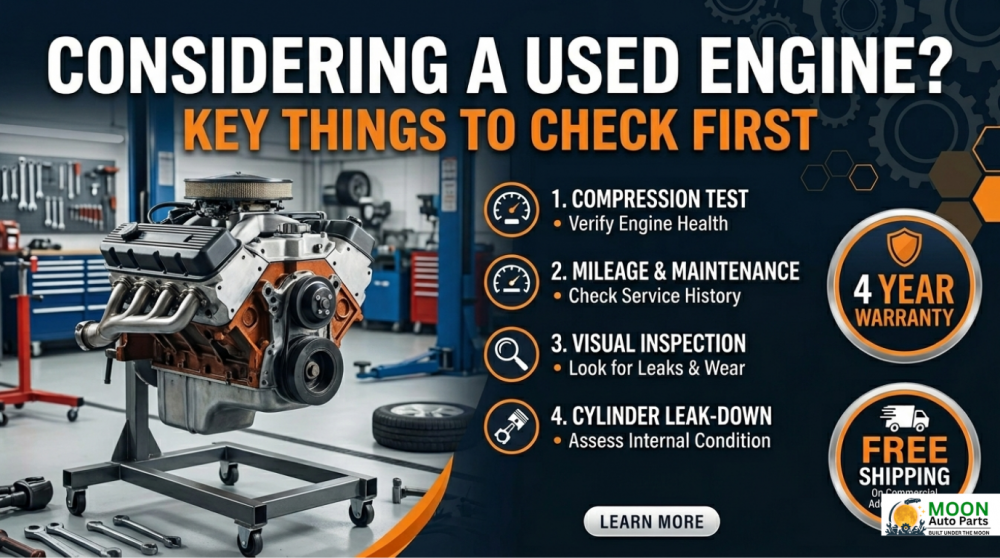
Mileage is important, but context matters more than the number alone. An engine with 70,000 well-maintained highway miles may be more reliable than one with 40,000 miles of harsh city driving and poor maintenance.
Ask detailed questions about the donor vehicle. Was it involved in a rear-end accident? Was it regularly serviced? Did it have documented oil changes? Engines removed from collision-damaged vehicles are often strong candidates because they were operational at the time of removal.
Request proof of mileage documentation whenever possible. Reputable suppliers maintain records and provide transparency rather than vague estimates.
3.External Inspection: Reading the Signs
A visual inspection can reveal early warning signs of neglect. Carefully examine the engine block and cylinder head for cracks, corrosion, or visible repairs. Oil residue around seals may indicate leaks. Damaged connectors or brittle wiring suggest exposure to heat or moisture.
Look closely at mounting points. Bent or cracked mounts can indicate impact damage. Surface rust is common, but deep corrosion around critical areas should raise concern.
If you are purchasing remotely, ask for detailed photos from multiple angles. A trustworthy supplier will provide clear images without hesitation.
4.Internal Condition and Mechanical Integrity
The true value of a replacement engine lies inside. Compression testing confirms that the cylinders seal properly and that piston rings and valves are functioning correctly. Leak-down testing identifies internal air leaks. Oil pressure testing ensures that lubrication channels are intact.
Without documented testing, you are essentially gambling. Professional inspection procedures significantly reduce risk. When evaluating suppliers, ask specifically about their testing protocols rather than accepting general claims of “good condition.”
5.Warranty Terms Reflect Confidence
Warranty coverage is more than paperwork; it reflects the supplier’s confidence in their product. Carefully review coverage duration, mileage limits, and installation requirements.
Some warranties require replacement of wear components such as timing belts, water pumps, and seals during installation. Others may specify professional installation by a certified mechanic. Failure to follow these guidelines could void coverage.
Working with established suppliers like Moon Auto Parts provides greater assurance because clear warranty policies and inspection processes are part of their business model. Before purchasing from Moon Auto Parts, review documentation thoroughly so you understand what is covered and for how long.
6.Supplier Reputation and Transparency
In today’s digital marketplace, reputation matters. Look for consistent customer feedback, transparent return policies, and clearly defined procedures. Avoid suppliers who provide limited information or avoid technical questions.
A reliable company will clearly outline shipping practices, warranty claims processes, and testing standards. Established providers such as Moon Auto Parts focus on quality control and customer communication, helping buyers feel secure in their decision.
Trust is built through documentation, communication, and consistent service — not just competitive pricing.
7.What Is Included With the Engine?
One common misunderstanding involves included components. Some engines are sold as long blocks, meaning they include the block and cylinder head but not external accessories. Others may include intake manifolds, injectors, sensors, and alternators.
Clarify exactly what comes with your purchase. Missing components can significantly increase final installation costs. Understanding inclusions ensures accurate budgeting and prevents delays once installation begins.
8.Shipping, Handling, and Logistics
Engines are heavy and sensitive mechanical assemblies. Improper shipping can cause damage before installation even begins. Confirm that the engine will be securely palletized, wrapped, and insured during transit.
Ask about delivery timelines and whether additional charges apply for residential delivery. Clear logistics planning prevents unexpected delays and expenses.
9.Installation Quality Determines Longevity
Even the best Used Engine can fail prematurely if installed improperly. Professional installation is strongly recommended. Certified mechanics understand torque specifications, alignment procedures, and system flushing requirements.
During installation, replacing gaskets, seals, spark plugs, filters, and timing components can prevent future issues. Flushing the cooling and oil systems ensures that debris from the old engine does not contaminate the replacement.
Proper installation transforms a replacement engine into a long-term solution rather than a temporary fix.
10.Evaluate the Overall Vehicle Condition
Before investing in a Used Engine, consider the vehicle’s total condition. If the transmission is failing or the frame has structural rust, the investment may not make financial sense. However, if the rest of the vehicle remains solid, replacing the engine can dramatically extend usability.
Many vehicle owners find that engine replacement costs significantly less than purchasing another vehicle with unknown history. It also preserves familiarity and comfort with a vehicle you already trust.
11.Environmental and Practical Benefits
Reusing engines supports environmental sustainability. Manufacturing new engines requires raw materials, energy, and industrial processes. By choosing a pre-owned unit, you reduce waste and extend the lifecycle of existing components.
Additionally, the process supports automotive recycling networks that responsibly dismantle vehicles and repurpose functional parts.
Final Thoughts
Purchasing a replacement engine is a major decision that demands careful evaluation. Compatibility verification, mileage review, mechanical testing, supplier reputation, warranty coverage, and professional installation all play critical roles in the outcome.
When sourced from reputable providers like Moon Auto Parts, a carefully inspected Used Engine can restore performance, protect your budget, and extend your vehicle’s life for years. The key is patience, research, and attention to detail.
A well-informed purchase today ensures dependable performance tomorrow — turning a stressful repair into a smart investment.
Read Also: How Do You Select the Right Pontiac Used Engine for Your Vehicle?