
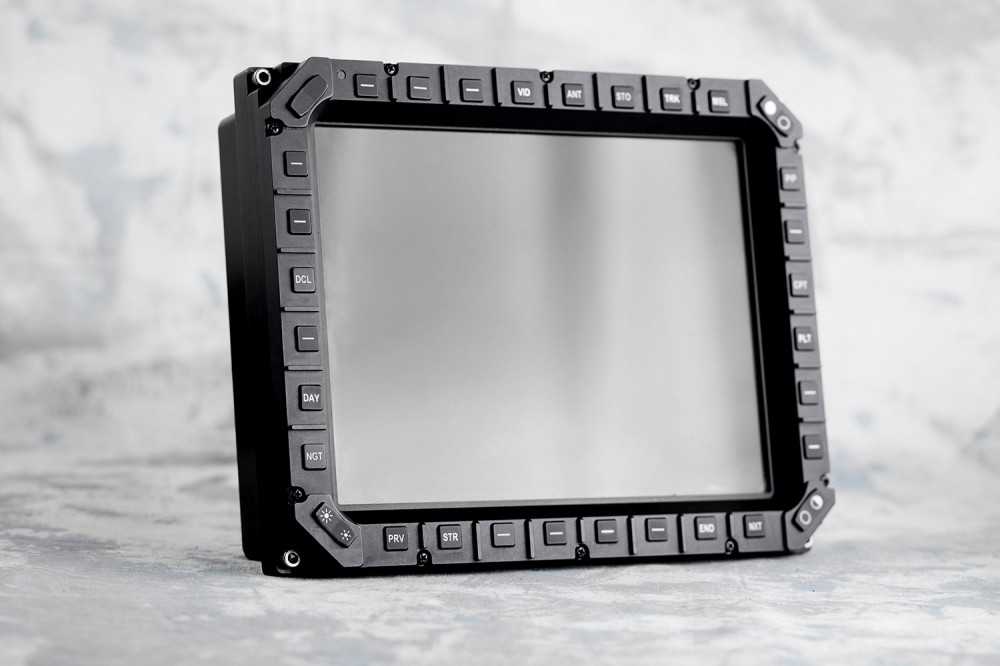
The proliferation of consumer touchscreen devices has created a tempting misconception among some aerospace and defense program managers: that commercial off-the-shelf (COTS) touch displays might serve adequately in mission-critical applications with minor protective adaptations. This assumption has led to numerous program failures, costly mid-life upgrades, and operational readiness issues. The fundamental difference between rugged touch screen displays and consumer touch screens isn't merely degree of protection-it's a fundamental engineering philosophy that starts at the silicon level and extends through every aspect of design, manufacturing, and lifecycle support.
Engineering from the Ground Up Versus Adding Protection
Off-the-shelf touchscreens are optimized for benign environments: climate-controlled offices, retail spaces, or consumer homes where temperatures range from 15-35°C, humidity remains moderate, vibration is minimal, and sunlight exposure is limited. When these displays inevitably fail in aerospace applications, the typical response is to add protective enclosures, ruggedized housings, and cooling systems. This approach fundamentally misses the problem.
Rugged touch screen displays begin with component selection specifically rated for extreme temperature operation (-55°C to +85°C for military applications). Display panels use extended-temperature LCD or OLED technology with specially formulated liquid crystals or organic materials that maintain optical properties across this range. Power supply components are military-grade with derating factors that ensure reliable operation even when subjected to temperature cycling, vibration, and electrical transients simultaneously-conditions that would destroy consumer power electronics.
The display controller, graphics processor, and application processor are selected not for maximum performance-per-watt (the consumer priority) but for extended temperature rating, availability over 15-20 year production cycles, and proven reliability in harsh environments. This component philosophy explains why rugged displays may use processors that appear less powerful on paper but deliver superior operational availability over platform lifecycles.
Touch Technology That Actually Works in Operational Environments
Consumer touchscreens assume bare-finger operation in still, stable environments. Rugged touch screen displays must function reliably when operators wear flight gloves, NBC protective equipment, or cold-weather gear. They must distinguish intentional touches from vibration-induced false contacts during helicopter operations or armored vehicle cross-country movement. They must reject water droplets, dust contamination, and electromagnetic interference that would render consumer displays inoperable.
Advanced projected capacitive touch technology in rugged displays incorporates sophisticated filtering algorithms tuned specifically for aerospace environments. The touch controller firmware implements adaptive thresholds that automatically adjust for changing conditions-tightening sensitivity when the platform is stationary and opening thresholds during high-vibration operations to prevent false activation. Palm rejection algorithms prevent inadvertent touches during turbulence when operators brace themselves against the display panel.
Many rugged touch screen displays offer multi-mode touch technology, switching between capacitive sensing for bare-hand operation and resistive sensing for gloved use, or implementing hybrid sensing that supports both simultaneously. This flexibility-impossible with consumer touch technology-ensures operational capability regardless of protective equipment requirements or mission conditions.
Optical Performance Under Extreme Lighting
Consumer displays typically offer 300-500 nit brightness adequate for indoor use. Aviation cockpits face direct sunlight streaming through windows during daytime operations-requiring 1000+ nit brightness for readability. Night operations demand the opposite extreme: displays must dim to near-zero luminance without compromising readability or creating cockpit reflections that degrade night vision capability.
Rugged touch screen displays achieve this performance through high-power LED backlighting with sophisticated thermal management that prevents the display from overheating at maximum brightness. Optical bonding-eliminating air gaps between display layers-virtually eliminates internal reflections that wash out screen content. Multi-layer anti-reflective coatings reduce surface reflections below 1%, maintaining contrast even when sunlight hits the screen at shallow angles.
Consumer displays lose readability and contrast when operated outside their designed temperature range. Rugged displays maintain consistent color accuracy, response time, and optical performance from arctic to desert conditions through careful selection of display panel technology and thermal compensation algorithms.
Reliability, Longevity, and Lifecycle Support
Consumer electronics follow 18-24 month product cycles. Components become obsolete. Manufacturers discontinue models and provide no long-term support. This model is incompatible with aerospace platforms that remain operational for 20-30 years and require consistent form, fit, function, and interface specifications throughout their service life.
Manufacturers of rugged touch screen displays commit to extended production runs, controlled obsolescence management, and long-term spare parts availability. When component obsolescence becomes unavoidable, they provide form-fit-function replacements with identical interfaces rather than forcing costly system redesigns. This lifecycle management philosophy recognizes that the display is part of a larger certified system that cannot be casually upgraded.
Mean Time Between Failures (MTBF) for consumer displays in benign environments might reach 30,000-40,000 hours. The same displays subjected to aerospace stress conditions see MTBF drop to 5,000 hours or less. Purpose-built rugged displays achieve MTBF exceeding 50,000 hours under actual operational conditions-not laboratory bench-test conditions. This tenfold improvement in reliability translates directly to operational readiness, reduced maintenance burden, and lower lifecycle costs.
AEROMAOZ, a world-renowned provider of rugged HMI solutions for mission-critical environments, specializes in rugged touch screen displays engineered from the ground up for aerospace and defense applications. With over 40 years of experience delivering mission-ready solutions to tier-1 system integrators and platform manufacturers, AEROMAOZ understands that true ruggedness cannot be added as an afterthought-it must be designed in from the start.
Conclusion: Purpose-Built Excellence
The success of rugged touch screen displays over off-the-shelf alternatives stems from purpose-built engineering that addresses aerospace requirements at every level-component selection, optical design, touch technology, thermal management, and lifecycle support. For system integrators and platform manufacturers, the choice isn't between rugged and COTS displays with protective housings. It's a choice between displays engineered for mission success and consumer devices that happen to have touchscreens. The difference in operational availability, lifecycle costs, and mission assurance makes this an easy decision for those who understand what true ruggedness requires.