
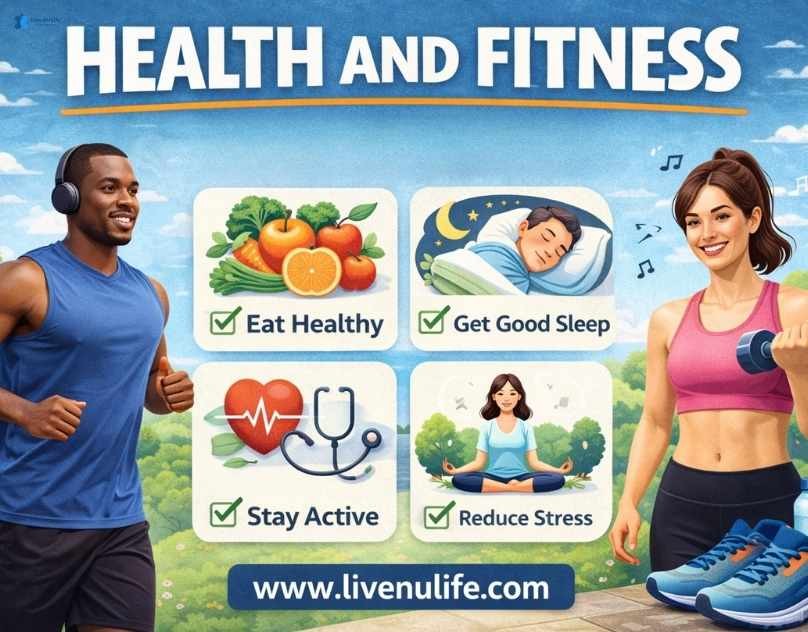
Health and Fitness: Simple Habits for a Stronger
Health and fitness are not about strict diets or exhausting workouts. They’re about creating a balanced lifestyle that helps you feel energetic, confident, and mentally strong every day. When you take care of your body and mind together, you don’t just live longer—you live better.
In today’s fast-paced world, it’s easy to ignore health until problems arise. But small, consistent efforts toward fitness can make a big difference in how you feel, move, and think.
What Does Health and Fitness Really Mean?
Health is more than just the absence of disease. It includes physical strength, mental well-being, emotional balance, and even good sleep.
Fitness refers to how well your body performs daily activities—from walking and lifting to managing stress and staying active without feeling exhausted.
True health and fitness work together. You can’t out-exercise poor sleep or eat junk food and expect long-term wellness. Balance is the key.
What Is Health and Fitness?
Learn how to stay healthy and fit. Get health tips, exercises & workout tips to improve your workouts. Health entails your physical, mental, and emotional well-being. Fitness can be described as your body being capable of doing daily activities without being tired. The combination of them is the center of a healthy and happy life. Health and fitness are really not about being perfect or having an extreme workout program; they are based on consistency, balance, and the ability to make daily decisions in favor of your body.
The Importance of Health and Fitness.
1. Prevents Chronic Diseases
Exercise and healthy eating lower the chances of contracting heart disease, diabetes, fat, and high blood pressure. A healthy choice now will safeguard your future.
2. Boosts Mental Health
Physical activity helps release endorphins, decreases stress hormones, and improves mood. A healthy lifestyle also helps in improving sleep and emotional stability.
3. Enhances power and efficiency.
A fit body can be more productive and will make you remain active, focused, and energetic during the day.
4. Enhances Longevity
A healthy lifestyle enhances immunity and aging, and it increases your life expectancy.
The Main Pillars of Health and Fitness.
1. Balanced Nutrition
Food is fuel your body is dependent on. A balanced diet will help in immunity, energy, digestion, weight control, and mental health. Healthy food ought to contain:
- Fresh fruits and vegetables.
- Lean proteins.
- Whole grains.
- Healthy fats.
- Adequate fiber.
- Plenty of water.
Limit your intake of processed foods, excess sugar, fried foods, and artificial additives. Strive to find whole and natural and nutrient-dense ingredients.
2. Regular Exercise
Physical activity is required to be strong, flexible, and have stamina and heart health. You do not have to go to the gym; even the daily routine movement can change your physical health
Types of exercise to include:
Cardio: walking, running, cycling
Strength exercise: resistance band, weights, body weight.
Flexibility: stretching, yoga
Balance exercises: Pilates, tai chi
Aim to get 30 minutes of activity at least 5 days per week.
3. Mental Well-being
The body is not the only thing that matters. Through mental fitness, you make better or worse choices, get better motivation, and become happier. Support that could be given to mental health:
- Practice meditation or mindfulness.
- Spend time in nature.
- Form desirable relationships.
- Take breaks from screens.
- Manage stress by doing breath work or yoga.
4. Quality Sleep
The mode of repair of your body is sleep. Sleep deprivation influences their hormonal levels, energy, mood, and immunity. Tips for better sleep:
- Maintain a regular schedule
- Avoid screens before bed
- Develop a relaxing bedtime routine
- Cut out caffeine in the evening
- Make your room cool and dark
- Try to get 7-9 hours of quality sleep every night.
5. Hydration
Hydration promotes digestion, skin, metabolism, and brain function. Take 2-3 liters of water a day, with more water should you be active or in a hot climate.
The 3 Simple Steps to a Sustainable Health and Fitness Routine.
1. Start Small
Achievable goals such as 10 minutes of walking or one healthy meal a day should be set.
2. Be Consistent
Indeed, consistency is more significant than intensity. Little things that are done daily are big.
3. Track Your Progress
With the help of a journal or an app, a person can keep track of workouts, meals, or mood changes. This keeps you motivated.
4. Choose Activities You Enjoy
Working out must be enjoyable, not coerced.
5. Make It a Lifestyle
Make healthier lifestyles a habit, not a goal.
Common Mistakes to Avoid
- Missing meals or dieting to death.
- Overtraining without proper recovery.
- Relying only on supplements.
- Ignoring sleep.
- Looking at weight and not at health.
Conclusion
Exercising and being healthy are lifetime endeavors that will make you feel stronger, more energetic, and more confident. You feed your body, exercise, alleviate stress, and rest in order to create a strong platform to live a happy and healthy life. Keep in mind that it is not about being perfect; it is about making small steps with your well-being on a daily basis.
FAQ: Health and Fitness
1. What do health and fitness really mean?
Health refers to your overall physical, mental, and emotional well-being. Fitness is your body’s ability to perform daily tasks efficiently. Together, they create a balanced and healthy lifestyle.
2. How can I start a fitness routine if I am a beginner?
Start small with activities like walking, stretching, or simple home workouts. Aim for 10–20 minutes a day and gradually increase the intensity as your stamina improves.
3. How often should I exercise?
Most experts recommend at least 150 minutes of moderate exercise per week—that’s about 30 minutes a day, five days a week.
4. What is the best diet for health and fitness?
A balanced diet includes fruits, vegetables, whole grains, lean proteins, healthy fats, and plenty of water. Avoid processed foods, sugary drinks, and excessive salt.
5. Can I stay healthy without going to the gym?
Yes! Walking, yoga, home workouts, dancing, and bodyweight exercises can all keep you fit. Fitness is about movement—not equipment.
6. How important is sleep for fitness?
Very important. Sleep helps your body recover, regulates hormones, and supports muscle repair. Aim for 7–9 hours of quality sleep each night.
7. How do I stay motivated to exercise regularly?
Set realistic goals, track progress, choose activities you enjoy, and create a routine. Working out with a friend or trainer can also help you stay consistent.
8. How much water should I drink daily?
Most people need 2–3 liters of water per day. Increase intake if you exercise intensely or live in a hot climate.
9. Is cardio better than strength training?
Both are important. Cardio improves heart health and burns calories, while strength training builds muscle, boosts metabolism, and improves posture. A balanced routine includes both.
10. Can I lose weight with exercise alone?
Exercise helps, but 80% of weight loss comes from diet. Combining healthy eating with regular physical activity gives the best results.