
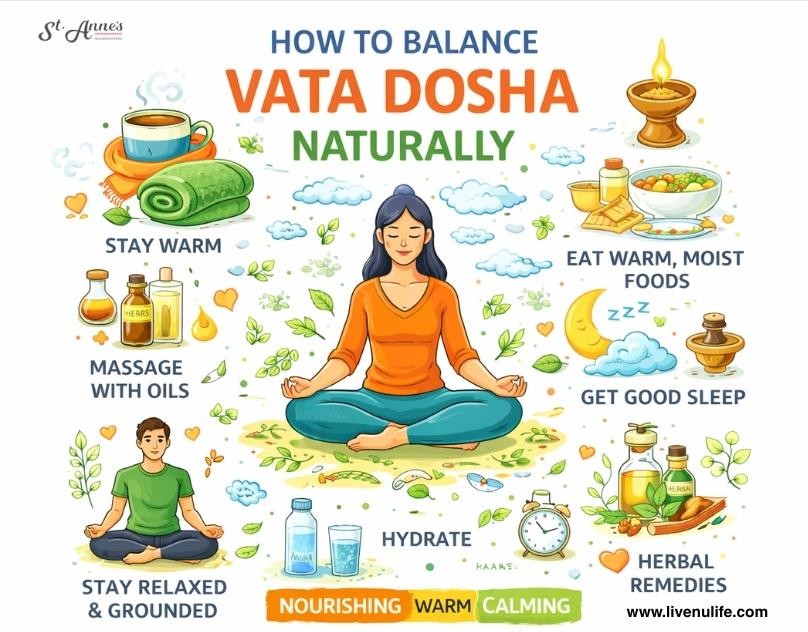
How to Balance Vata Dosha Naturally
If you often feel anxious, restless, fatigued, or bloated or struggle with dry skin and poor sleep, your Vata dosha may be out of balance. According to Ayurveda, Vata governs movement in the body and mind. When balanced, it supports creativity, energy, and adaptability—but when aggravated, it can lead to stress, digestion issues, and nervous system imbalance.
The good news is that How to Balance Vata Dosha naturally through simple lifestyle changes, diet adjustments, daily routines, and mindful practices. Ayurveda emphasizes grounding, warmth, and consistency to calm excess Vata and restore harmony.
What Is Vata Dosha?
In Ayurveda, Vata is one of the three doshas—Vata, Pitta, and Kapha. Vata is made up of the elements air and ether (space) and controls all movement in the body.
Vata governs:
- Breathing and circulation
- Nervous system function
- Digestion and elimination
- Creativity and mental activity
A balanced Vata promotes enthusiasm, clarity, and flexibility. An imbalanced Vata creates dryness, instability, and overactivity.
Signs of Vata Dosha Imbalance
Common symptoms of excess Vata include:
- Anxiety, worry, or fear
- Restlessness and insomnia
- Dry skin, hair, or lips
- Constipation and bloating
- Irregular appetite
- Fatigue or low stamina
- Cold hands and feet
- Difficulty focusing
Balancing Vata focuses on calming these qualities with opposite energies—warmth, moisture, grounding, and routine.
How to Balance Vata Dosha Naturally
1. Follow a Consistent Daily Routine
Vata thrives on regularity. Irregular schedules increase instability and anxiety.
Helpful routine tips:
- Wake up and sleep at the same time daily
- Eat meals at consistent times
- Avoid skipping meals
- Create calming morning and evening rituals
Consistency helps stabilize the nervous system and digestion.
2. Eat a Vata-Pacifying Diet
Diet plays a major role in balancing Vata. Vata is cold, dry, and light—so it benefits from warm, moist, nourishing foods.
Best Foods for Vata Balance
- Warm, cooked meals
- Soups, stews, and porridges
- Rice, oats, wheat
- Cooked vegetables like carrots, squash, sweet potatoes
- Healthy fats (ghee, olive oil, sesame oil)
- Warm milk with spices
Foods to Limit
- Cold or raw foods
- Dry snacks
- Excess caffeine
- Carbonated drinks
- Processed and frozen foods
Eating slowly and mindfully is just as important as food choice.
3. Use Warming Spices
Gentle spices support digestion (Agni) and reduce bloating. Vata-balancing spices include:
- Ginger
- Cumin
- Fennel
- Cinnamon
- Cardamom
- Turmeric
These spices improve circulation and warmth without overstimulating the system.
4. Practice Abhyanga (Self-Oil Massage)
Daily Abhyanga is one of the most powerful Ayurvedic practices for calming Vata.
Benefits of oil massage:
- Nourishes dry skin
- Calms the nervous system
- Improves circulation
- Promotes deep relaxation
Use warm sesame oil or ashwagandha oil, and massage gently before bathing.
5. Prioritize Rest and Quality Sleep
Vata imbalance often disrupts sleep. Rest restores stability and energy.
Tips for better sleep:
- Go to bed early (before 10 PM)
- Avoid screens at night
- Drink warm herbal tea
- Practice gentle breathing or meditation
- Keep the bedroom warm and quiet
Deep sleep is essential for Vata healing.
6. Practice Gentle, Grounding Movement
Vata needs movement—but not excessive or intense exercise.
Best exercises for Vata balance:
- Yoga (slow, grounding styles)
- Tai Chi or Qigong
- Walking in nature
- Stretching and gentle mobility
Avoid overexertion, high-intensity workouts, or irregular exercise routines.
7. Use Calming Breathing and Meditation
Vata imbalance affects the nervous system. Breathwork helps bring calm and focus. Helpful practices include:
- Deep belly breathing
- Alternate nostril breathing (Nadi Shodhana)
- Guided meditation
- Mindfulness practices
Even 10 minutes daily can significantly reduce anxiety and restlessness.
8. Support Vata with Ayurvedic Herbs
Certain Ayurvedic herbs are known to calm and nourish Vata. Common Vata-balancing herbs:
- Ashwagandha
- Brahmi
- Shatavari
- Licorice (Yashtimadhu)
Always use herbs under proper guidance, especially if you have health conditions.
9. Create a Warm, Grounded Environment
Environmental factors strongly affect Vata.
Helpful tips:
- Stay warm, especially in cold weather
- Avoid excessive travel
- Reduce noise and sensory overload
- Use soft lighting and calming scents
A peaceful environment calms the mind and body.
Lifestyle Habits That Aggravate Vata
To maintain balance, try to avoid:
- Skipping meals
- Overworking and multitasking
- Excess screen time
- Cold exposure
- Excessive fasting
- Irregular sleep patterns
Small adjustments can make a big difference.
FAQs: How to Balance Vata Dosha Naturally
What is the fastest way to How to balance Vata Dosha naturally?
Following a regular routine, eating warm foods, practicing oil massage, and prioritizing sleep help calm Vata quickly.
Which foods calm Vata dosha?
Warm, cooked foods with healthy fats, mild spices, and grounding qualities are best for Vata balance.
Can yoga help balance Vata dosha?
Yes. Gentle, slow yoga and grounding movements are highly effective for calming Vata.
Does stress increase Vata dosha?
Yes. Stress, anxiety, and overthinking significantly aggravate Vata imbalance.
How long does it take to balance Vata dosha naturally?
Some relief may be felt within days, while deeper balance develops over weeks with consistent practice.
Final Thoughts: How to Balance Vata Dosha naturally
Balancing Vata dosha naturally is about creating stability, warmth, and nourishment in your daily life. Through mindful routines, grounding foods, gentle movement, and calming practices, you can restore harmony and feel more centered, energized, and peaceful.
Ayurveda teaches that balance is not forced—it’s cultivated gently, day by day.